
Project conditions
Room-Level Planning
A dining room usually raises fresh-air and sound questions. Restrooms and support areas often start with exhaust, duct path, controls, and odor source. Storage rooms may add moisture or stale-air concerns.
List each restaurant room separately so dining, restroom, corridor, storage, and kitchen-adjacent spaces can carry their own occupancy, odor source, humidity source, duct route, sound target, controls, and service-access notes.
Doorway air curtain questions belong with the entrance opening; room ventilation questions belong with fresh-air, exhaust, duct path, and sound context.
Equipment fit
Restaurant Ventilation Fit
Fresh-air or ERV systems are natural starting points for occupied dining areas. The restaurant ventilation ERV and exhaust fan handoff should route exhaust fans, inline duct fans, and cabinet fan options to restrooms, corridors, storage areas, and other support spaces where the airflow path is known.
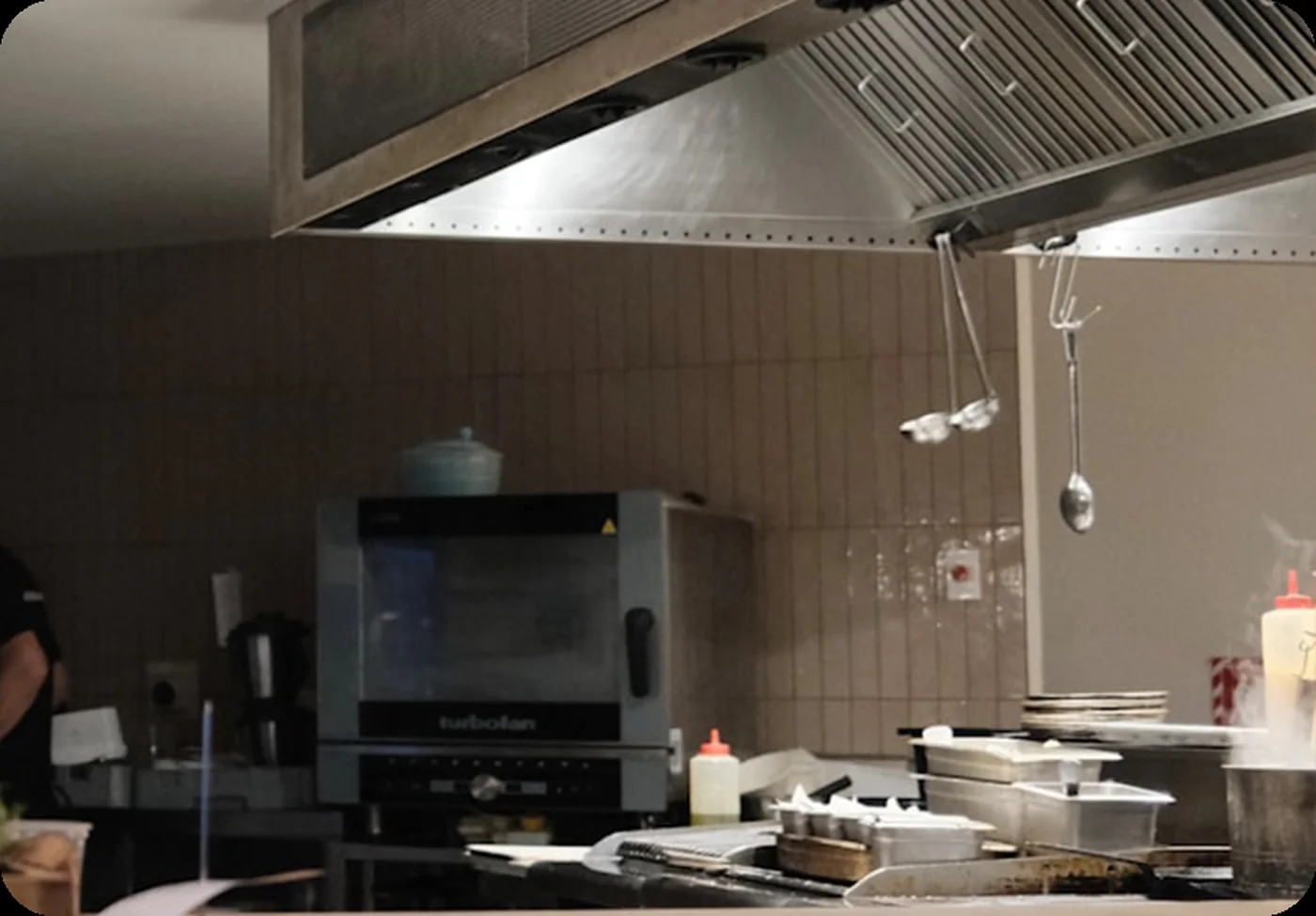
For kitchen-adjacent conditions, the kitchen ventilation and ERV handoff for restaurant support spaces should preserve pressure-balance and authority notes while keeping hood design separate.
Project data
Split the restaurant into rooms first, then match fresh-air, exhaust, inline, cabinet, or air-curtain paths to each condition.
- Room list by dining, restroom, storage, support, and kitchen-adjacent zones
- Occupancy and operating schedule
- Odor or humidity source
- Duct route, discharge location, controls, and sound sensitivity