
Restroom duct route
The cafe restroom fan looks like a simple replacement until someone traces the discharge route. The duct crosses the ceiling, turns twice, and exits through a small wall cap, so the fan has to overcome more than the room size.
A bathroom exhaust fan for a long duct run may list enough CFM in free air and still fail once elbows, dampers, and termination resistance are included. Treat the job as a small duct-system review: room airflow, equivalent duct length, static pressure, sound, access, and the ceiling-mounted-versus-inline equipment path.
Check duct size, target CFM, equivalent length, elbow count, termination restriction, sound expectation, ceiling access, voltage, controls, and current model data before choosing a ceiling-mounted or inline fan.
For long-run bathroom fan or bath-fan duct-length questions, collect the real route before treating the project as a simple replacement.
Set the room airflow target
The first decision is the bathroom's required exhaust airflow, not the fan style. For light-commercial restrooms, the project team usually starts from room volume, expected use, moisture load, fixture count, odor control requirement, or a project-specific ventilation basis. That target becomes the CFM that the installed fan must deliver at the end of the duct path.
Do not confuse free-air CFM with installed CFM. A fan may show a convenient airflow number when resistance is low, but a long duct path with elbows, dampers, and a restrictive termination can lower delivered airflow. The useful selection question is: what CFM is needed after the fan sees the real pressure path?
Bathroom vent duct size and bathroom exhaust fan duct size should be checked with target CFM, equivalent duct length, elbow count, termination restriction, static pressure, sound expectation, ceiling access, voltage, controls, and current model data before choosing a ceiling-mounted or inline fan.
Record whether the room is a low-use staff restroom, a customer-facing restroom, a shower-adjacent utility bathroom, or a small commercial washroom with high duty cycle. Usage pattern affects how conservative the review should be.
For the initial airflow baseline, start with the bathroom exhaust fan sizing calculator. For room-level design inputs, review the bathroom ventilation application checklist.
Translate the duct route into resistance
Long duct runs become difficult because the fan is not only moving air out of the room. It is pushing or pulling through straight duct length, elbows, duct transitions, backdraft dampers, wall caps, roof caps, and sometimes flexible duct that may sag above the ceiling. Each item adds resistance.
Equivalent duct length is a practical way to make the route visible. A short straight run with one smooth outlet may be easy. A longer route with several elbows and a tight termination can behave like a much longer duct than the tape-measure distance suggests.
Duct diameter matters as much as length. A smaller duct increases velocity and pressure loss, and it can make the fan louder at the grille or termination. Contractors should confirm the actual duct diameter and termination size instead of assuming they match the fan outlet.
| Field condition | Selection risk | What to document |
|---|---|---|
| Long straight duct | Pressure loss rises as length increases. | Measured run length and duct diameter |
| Multiple elbows | Turns add resistance and can reduce delivered CFM. | Elbow count, angle, and spacing |
| Small or restrictive termination | Wall and roof caps can become the limiting point. | Cap type, free area, damper, and outlet size |
| Flexible or uneven duct | Sagging and rough surfaces can increase resistance. | Duct material, support, and route photos |
To turn duct length, fittings, and accessories into a reviewable pressure path, start with the duct fan static pressure estimator. For broader ducted fan selection language, keep the duct fan selection guide.
Choose between ceiling-mounted and inline fan direction
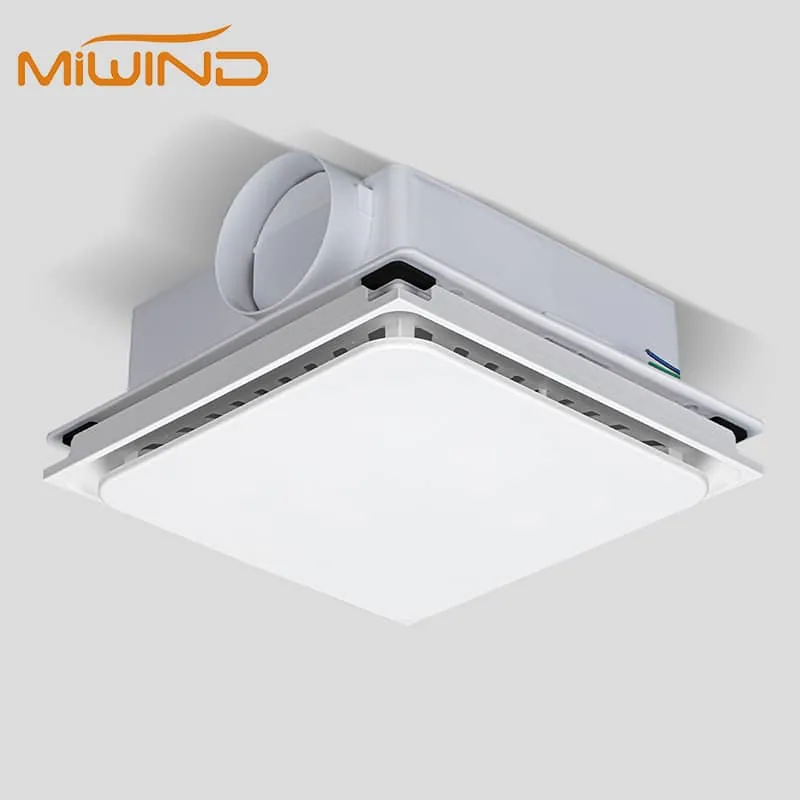
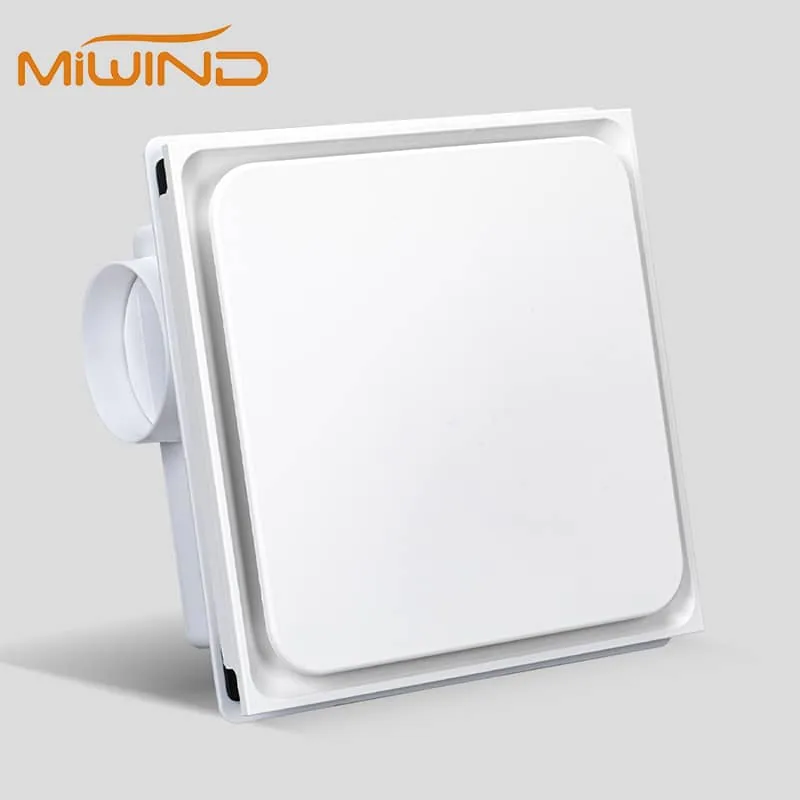
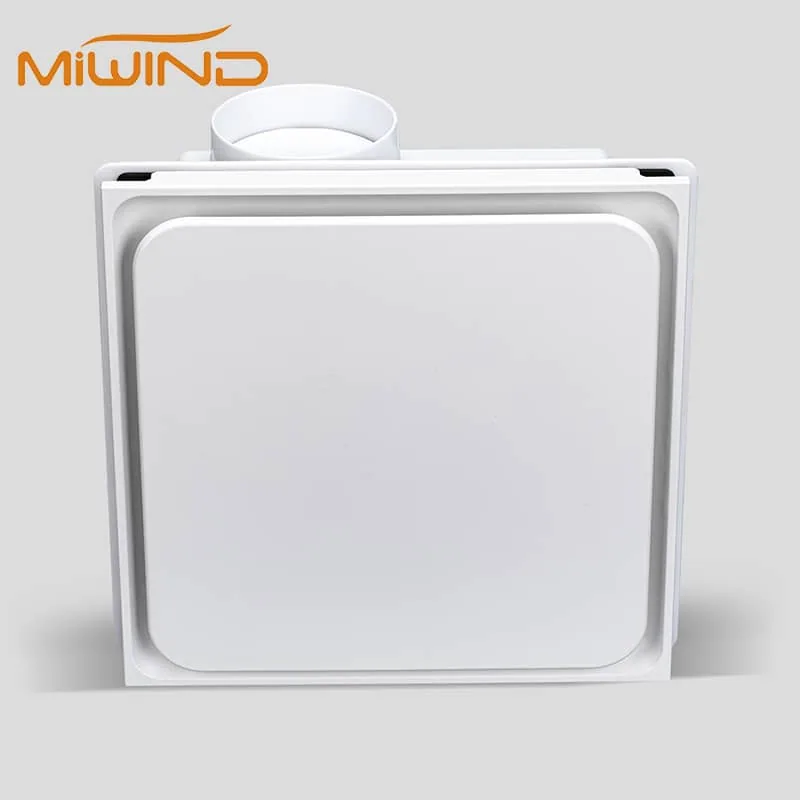
A ceiling-mounted exhaust fan can still be the right product when the restroom is modest, the required CFM is moderate, ceiling access is simple, and the duct route is long but not severely restrictive. The review should still confirm the fan's operating point against the expected pressure, not only the face size or free-air rating.
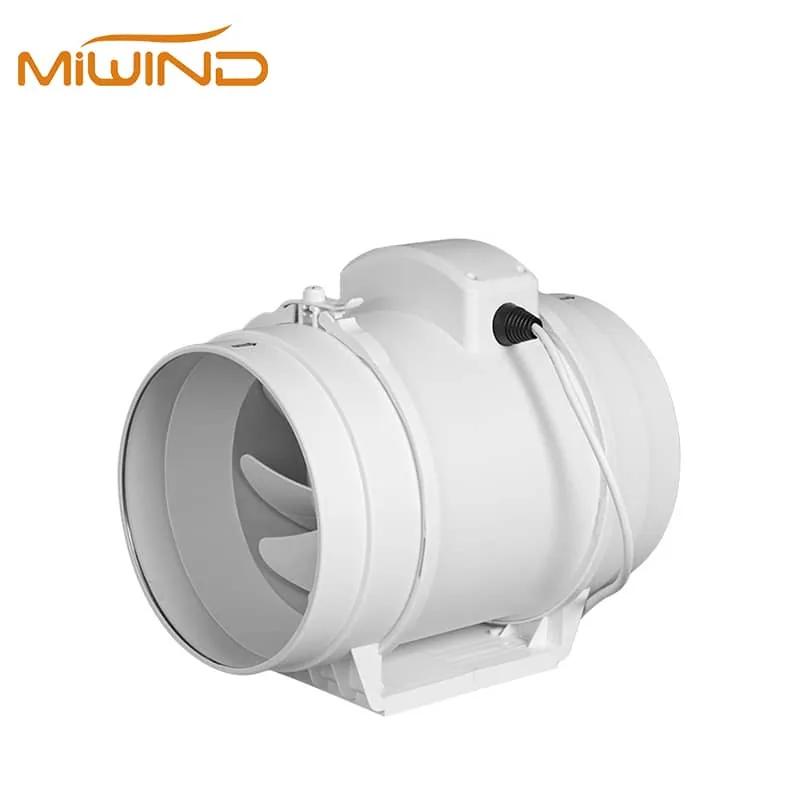
Inline fan selection becomes stronger when the run is longer, the duct has several elbows, the ceiling unit would be hard to service, or the project wants the motor location away from the occupied room. An inline fan can keep the room grille simpler while placing the serviceable fan body at a more practical point in the duct route.
Neither category is automatically better. The selection depends on target CFM, static pressure, duct diameter, sound expectation, access, controls, and whether the existing ceiling opening forces the equipment layout.
Ceiling fan path
Choose a ceiling fan path when the duct route is controlled, access is available at the ceiling, and the room can accept the sound source near the occupied zone.
Inline fan path
Choose an inline fan path when the grille location and fan service location should be separated, or when the duct pressure check points beyond a basic ceiling unit.
For ceiling-mounted options, compare MiWind ceiling mounted exhaust fans. For longer or more serviceable duct layouts, review MiWind inline duct fans.
Review sound after airflow and pressure are known
Sound complaints often appear when a fan is forced to operate through a restrictive path. The buyer may blame the fan rating, but the installed noise can come from high duct velocity, tight elbows, a rattling grille, a restrictive cap, or vibration transfer into the ceiling.
Sone and dBA data are useful only when attached to the right model and operating point. A quiet fan at low resistance may not remain quiet when installed against a long, restrictive duct route. That is why sound should be reviewed after CFM and static pressure are understood.
For customer-facing restrooms, offices, cafes, and clinics, note the noise sensitivity in the RFQ. A product specialist may steer the project toward a different fan size, speed strategy, duct diameter, termination, or inline layout.
For acoustic terminology and procurement caution, read the exhaust fan sone ratings guide. For product-family comparison, review MiWind exhaust fan products.
Prepare the RFQ around installed conditions
A strong request does not ask only for a bathroom fan size. It gives the distributor enough information to judge whether the project is a ceiling fan replacement, an inline fan selection, or a duct-route problem that should be corrected before equipment is selected.
Include room dimensions, ceiling height, bathroom use pattern, desired CFM if known, duct diameter, duct length, elbow count, termination type, voltage, control method, ceiling access, and photos of the existing fan, duct path, and outlet. If the duct route is unknown, say which sections can be inspected.
If the bathroom is part of a tenant improvement, cafe, school, office, or healthcare support area, include operating hours and noise sensitivity. That context helps avoid a fan that technically moves air but creates an occupant or maintenance problem later.
- Room area, ceiling height, and use pattern
- Target CFM or required air-change basis if specified
- Duct diameter, measured length, elbow count, damper, and termination type
- Available mounting depth and service access above the ceiling
- Voltage, controls, duty cycle, and sound sensitivity
- Photos of the fan location, ceiling opening, duct route, and exterior outlet
For model-level inline fan selection, open the inline duct fan series page. When field dimensions and photos are ready, request a bathroom exhaust fan recommendation.
Installed airflow decision
A bathroom exhaust fan for a long duct run should be selected by installed CFM, equivalent duct length, duct diameter, fitting count, static pressure, sound expectation, and service access. The fan category comes after those inputs are visible.
Long-run bathroom exhaust fan handoff should connect the bathroom exhaust fan sizing calculator, duct fan static pressure estimator, exhaust fan sone ratings guide, ceiling-mounted exhaust fan series, inline duct fan series, and current model documents.
If the route is short and controlled, a ceiling-mounted exhaust fan may be appropriate. If the route is longer, more restrictive, or difficult to service from the room ceiling, inline fan selection may be the better path. In both cases, selected model data should be checked before purchase.
Long-run bathroom exhaust selection should be based on the real duct path and selected model values, not nominal airflow labels alone.
Begin the field check with the bathroom exhaust fan sizing calculator. Pair that result with the duct fan static pressure estimator.