

Service access question
A warehouse utility room needs exhaust support, but the duct route is long, two grilles share the run, a backdraft damper adds resistance, and the ceiling access is poor. The fan category is only part of the problem.
For commercial ductwork, compare the inline and cabinet paths only after the buyer has documented target CFM, external static pressure, duct accessories, service location, footprint, voltage, controls, and sound expectations.
The practical choice follows the installed conditions: an inline fan may suit a compact accessible route, while a cabinet fan may be stronger when the system needs more deliberate service access or a higher-resistance pressure path.
Begin with CFM and the pressure path
Commercial duct fan selection should begin with the required CFM and the resistance that airflow must overcome. The same 600 CFM target can be simple in a short straight duct and difficult in a route with long duct length, multiple elbows, filters, grilles, dampers, louvers, and a tight discharge.
Inline fans and cabinet fans are not interchangeable labels. An inline fan often fits a duct-integrated path where the fan body can sit in the route and access is manageable. A cabinet fan becomes more relevant when the system needs a more deliberate serviceable unit, higher accessory load, or equipment-room-style access.
This is inline cabinet fan selection for commercial ductwork; a cabinet type inline fan comparison should stay tied to the installed pressure path and service condition.
Inline cabinet fan and cabinet type inline fan requests should compare target CFM, external static pressure, duct route, accessory load, service side, footprint, voltage, controls, sound expectation, and current cabinet centrifugal fan documents before model selection.
Before comparing product families, define whether the fan supports exhaust, supply, transfer, or makeup airflow. The duty affects filtration, controls, airflow direction, service interval, and the risk of noise or pressure complaints after installation.
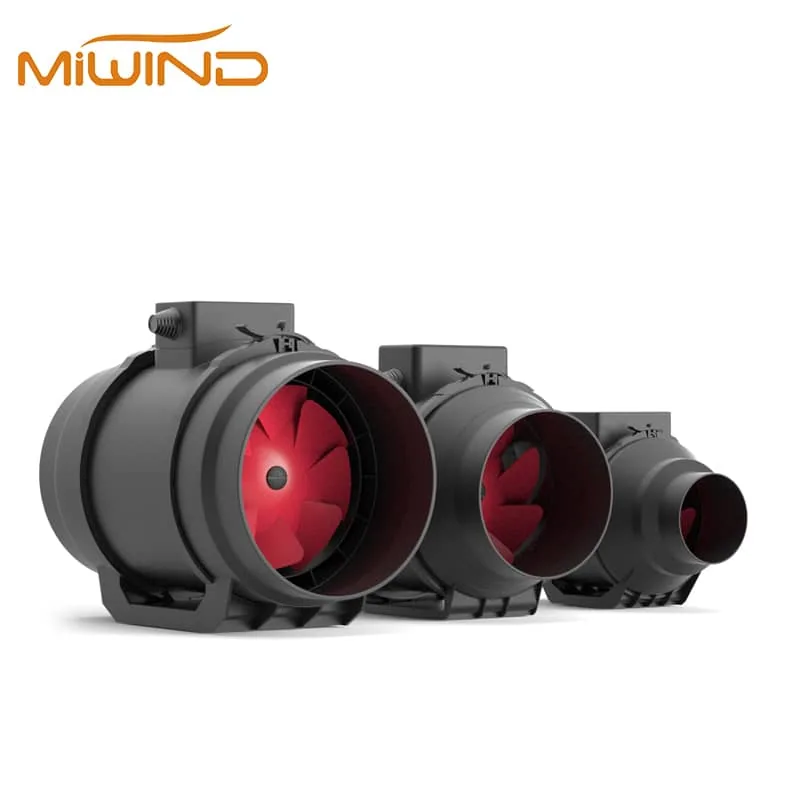
For the airflow starting point, estimate room or zone demand with the ventilation CFM calculator. For duct resistance inputs, organize fittings and accessories in the duct fan static pressure estimator.
inline fan selection usually fits
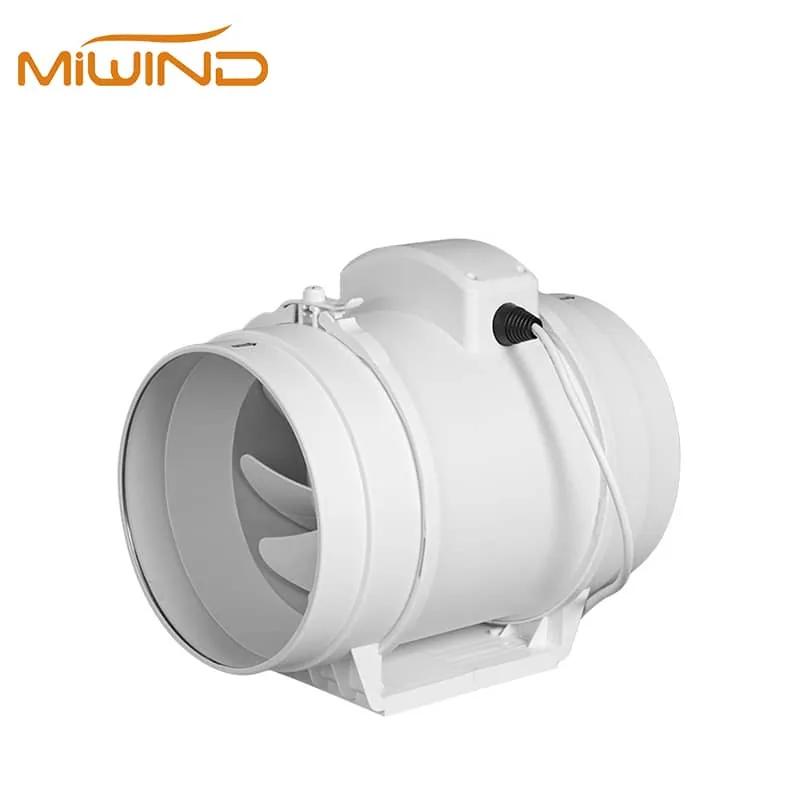
An inline duct fan is usually the cleaner choice when the project needs a compact fan installed within the duct route. Typical examples include localized exhaust, restroom support, small commercial rooms, light fresh-air assist, storage-room ventilation, or a support zone where the duct length and accessory load remain controlled.
The inline path still needs a real pressure check. A small fan hidden above the ceiling can become a maintenance problem if the installer cannot reach it, if the duct diameter is undersized, or if the fan is expected to overcome filters and restrictive terminations that were not included in the pressure check.
The key handover question is whether the installation is truly serviceable. Access panels, clamp direction, duct support, motor clearance, and control wiring matter as much as the fan category.
| Inline fan fit | Why it can work | What to verify |
|---|---|---|
| Compact duct route | Fan body can sit in the duct path. | Duct diameter, mounting position, and access panel |
| Moderate accessory load | Resistance may remain within a duct fan selection range. | Elbows, dampers, grilles, and termination |
| Noise-sensitive room | Fan can sometimes be moved away from the occupied grille. | Installed sound, duct velocity, and vibration transfer |
| Light commercial support zone | Installation can stay compact. | Duty cycle, controls, and service interval |
For family-level options, compare MiWind inline duct fans. For a product-level reference, check the inline duct fan series page.
cabinet fan selection becomes stronger
A cabinet fan selection becomes stronger when the duct system starts looking less like a simple run and more like a serviceable equipment section. That may include higher static pressure, filter boxes, multiple grilles, dampers, long duct routes, larger utility spaces, or a maintenance team that needs clear access to the blower and electrical side.
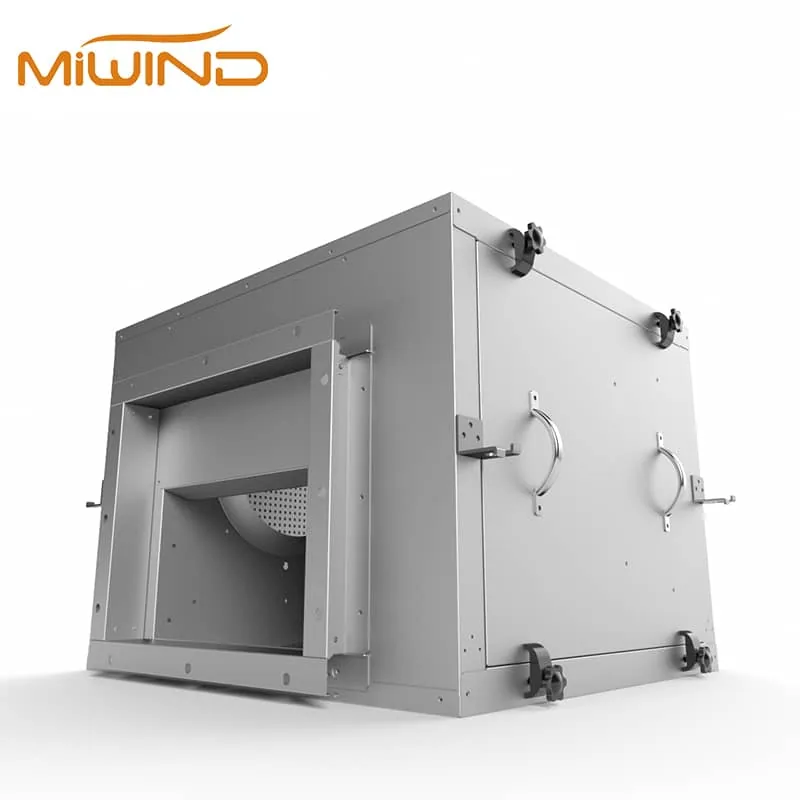
Cabinet fans can also make sense when the equipment should sit in a mechanical area or utility zone rather than disappear above a finished ceiling. The cabinet layout can make clearance, service direction, and component inspection easier to plan during procurement.
This does not make a cabinet fan automatically superior. It means the project has moved into a more structured fan selection where footprint, service clearance, pressure class, voltage, phase, controls, and model-level fan data should be checked together.
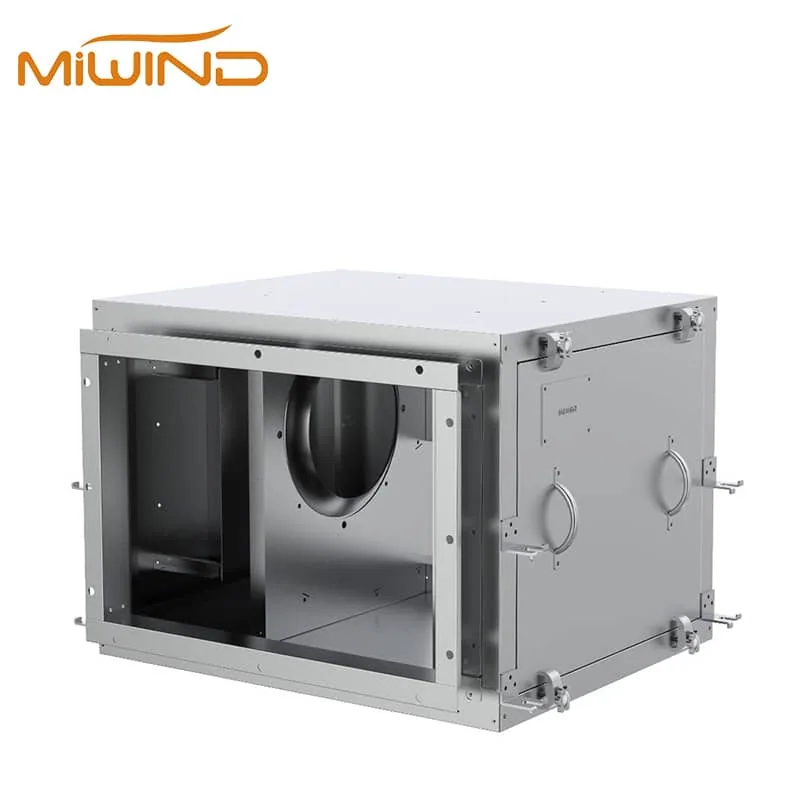
For serviceable utility fan options, compare MiWind cabinet centrifugal fan. For a cabinet-style product reference, compare the cabinet centrifugal fan series page.
Compare the two families by installed constraints
The strongest comparison is not category against category. It is category against the installed constraints of the duct system. A compact inline fan may be the right answer for a direct route with moderate pressure. A cabinet fan may be the stronger fit when filters, multiple pickups, dampers, service clearance, and higher resistance are part of the system.
Static pressure is often the tie-breaker, but it should not be the only one. Installed sound, motor access, duct support, cleaning interval, voltage, controls, and available mounting footprint can change the product direction even when two fans appear to cover a similar CFM range.
If the project already includes a filter, louver, silencer, backdraft damper, fire or smoke-related requirement, or code-governed kitchen system, those details must be separated from basic fan selection and reviewed by the project team. Do not bury them inside a simple fan RFQ.
| Selection factor | Inline fan direction | Cabinet fan direction |
|---|---|---|
| Duct route | Shorter or cleaner route with accessible fan location | Longer or more involved route with planned equipment access |
| Static pressure | Moderate resistance after fittings are counted | Higher resistance or accessory-heavy path needing broader selection |
| Filters and dampers | Light accessory load when pressure remains manageable | More deliberate selection when accessories affect service and pressure drop |
| Service access | Access panel or exposed duct location is available | Cabinet clearance and service side can be planned |
| Sound expectation | May work when duct velocity and mounting are controlled | May help when equipment location and isolation are planned |
For pressure terminology and fan selection details, keep the duct fan selection guide. For airflow reference values, compare against the ventilation CFM chart.
Let application conditions narrow the answer
A warehouse exhaust path, restaurant support zone, classroom fresh-air assist route, and basement utility ventilation project can all use duct fans, but they do not carry the same constraints. Dust, moisture, odor, occupant sound sensitivity, access, operating schedule, and filtration needs change the selection.
Warehouse and utility spaces often care about service access and robust airflow more than a hidden installation. Offices and classrooms may care more about sound, fresh-air distribution, and maintenance disruption. Restaurant-adjacent support airflow may require extra caution because kitchen exhaust and hood systems can involve project-specific engineering and local authority review.
Application conditions keep the fan comparison practical. They prevent a buyer from choosing a product family only because a similar CFM appears in a catalog table.
For utility and loading-area airflow questions, review warehouse ventilation applications. For occupied-room constraints, compare office and classroom ventilation inputs. For food-service support airflow, read the restaurant ventilation application guide.
Build the RFQ around selection evidence
Give the reviewer enough evidence to compare fan families without guessing: target CFM, airflow duty, duct route sketch, duct diameter, straight length, elbow count, grilles, dampers, filters, louvers, termination, mounting location, available service clearance, voltage, phase, control expectation, and operating schedule.
Photos are especially important for existing buildings. A ceiling cavity, utility room, mechanical platform, exterior termination, or tight access condition can decide whether inline or cabinet selection is practical before model numbers are discussed.
If the project has a design engineer, include the specified airflow and external static pressure. If not, keep the request conservative and ask for model-level confirmation once the pressure path is organized.
- Target CFM and whether the fan is supply, exhaust, transfer, or support airflow
- Duct diameter, straight length, elbow count, and termination type
- Filters, dampers, grilles, louvers, silencers, or other accessories in the path
- Mounting location, available footprint, service side, and access clearance
- Voltage, phase, controls, operating schedule, and noise sensitivity
- Photos or sketches showing the route from inlet to discharge
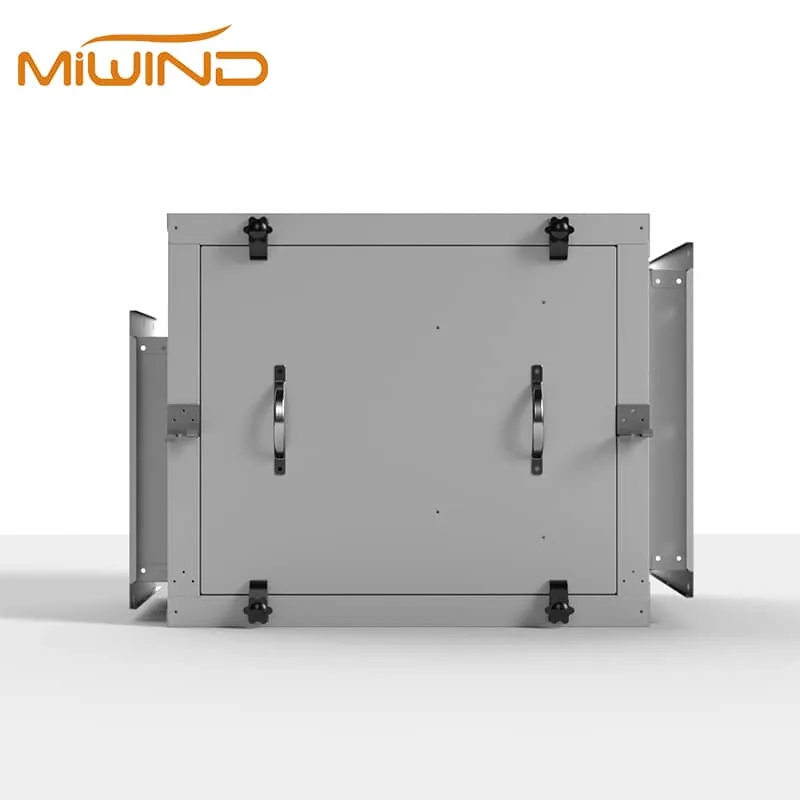
When the duct route and service photos are ready, request an inline or cabinet fan recommendation. For terminology during handoff, reference the air movement glossary.
Fan family handoff
The inline fan vs cabinet fan decision should be made from installed conditions: required CFM, static pressure, duct route, accessory load, sound expectation, mounting location, service access, voltage, controls, and application conditions.
Inline cabinet fan handoff should connect the ventilation CFM calculator, duct fan static pressure estimator, inline duct fan family, cabinet centrifugal fan series, duct fan selection guide, and current model documents.
Use inline fan selection when the duct route is compact, accessible, and moderate in resistance. Use cabinet fan selection when the installation needs a more deliberate equipment section, clearer service access, or a higher-resistance pressure path. Final procurement should still be based on selected model data and the actual duct system.
Do not select either fan family from nominal CFM alone. The duct pressure path and service condition decide whether the category is suitable.
Estimate airflow with the ventilation CFM calculator. Compare the duct route with the duct fan static pressure estimator.