
Dock door and bay behavior
At the dock, the roll-up door stays open during receiving. Staff feel drafts near the opening, the pallet staging bay turns stagnant, and summer deliveries push humidity higher than the rest of the warehouse.
That is not one fan problem. Warehouse loading-area airflow planning should separate dock-door exposure, affected zone volume, target CFM, static pressure, air curtain fit, moisture recovery, and service access before the RFQ moves to product selection.
Warehouse ventilation systems should start from warehouse ventilation requirements by zone, especially when storage building ventilation and loading-door exposure behave differently.
A loading area is not one airflow problem
Warehouse loading areas are often described with one general complaint: too hot, too dusty, too humid, or too much outdoor air entering through open doors. In practice, that zone usually combines several airflow questions at once. The dock opening, the adjacent storage zone, staff traffic paths, and any equipment heat or moisture load all interact.
That is why loading-area planning should begin by separating the conditions rather than treating the whole space as one giant room. A dock door exposed to weather is one type of problem. A stagnant storage bay deeper inside the building is another. A humid receiving area that struggles after deliveries may need both door control and moisture review.
A ventilation system for warehouse spaces should not be reduced to a single fan size when the storage building ventilation need, dock-door condition, machine hall ventilation concern, and service access point to different equipment paths.
For early product research, this separation is what makes the article useful. Buyers are often not ready for a finished mechanical design. They are trying to understand which part of the zone needs an air curtain, which part needs general airflow support, and when a humidity-control discussion belongs in the same package.
Before requesting equipment, identify the primary failure: infiltration at the opening, poor circulation in the bay, heat buildup near equipment, condensation after receiving, or moisture-sensitive stored goods. Each condition points to a different first equipment direction.

For the application checklist, start with the warehouse ventilation page. For zone-volume estimates, use the ventilation CFM calculator.
Start with the door condition and the zone condition
The first distinction is between open-door exposure and overall room air movement. If the main issue is outdoor-air entry through a large loading opening, the review may start with air curtain logic and door dimensions. If the complaint is trapped air, heat, or weak circulation within the loading zone, the review may begin with airflow target and duct fan support.
Many projects need both. A loading area can suffer from direct infiltration at the door and still have poor circulation deeper in the zone. That is why warehouse airflow planning works best when the doorway is reviewed separately from the larger room volume, then brought back together as one operating picture.
Measure the door and the zone differently. Door review needs finished width, clear height, mounting height, exposure, traffic, and door-open time. Zone review needs floor area, ceiling height, target CFM or ACH basis, duct route, equipment heat, and whether supply, exhaust, or circulation support is being considered.
| Observed condition | Likely first direction | Key input |
|---|---|---|
| Weather or dust entering through dock opening | Air curtain sizing | Door size and exposure |
| Stagnant air in adjacent bay | Ventilation CFM target | Zone volume and target airflow |
| Humidity after deliveries | Moisture and airflow check | Operating pattern and room recovery |
| Mixed complaint across door and storage area | Combined door and zone plan | Door condition plus zone behavior |
an air curtain belongs in the discussion
Air curtains are most relevant when the dock or service opening creates a clear boundary problem. If wind, dust, comfort loss, or repeated outdoor-air entry centers on the opening itself, the review should start with finished width, mounting height, exposure, and traffic pattern through the door.
That does not mean every loading door needs an air curtain. The point is to identify whether the operational complaint is tied to the opening or to the room as a whole. A door-focused problem should not be diluted into a broad warehouse airflow estimate when the opening condition is clearly the main issue.
If the opening serves carts, forklifts, or frequent receiving traffic, that operating pattern should be described early. Loading areas are practical environments. The review has to match movement through the opening, not just the nominal size of the door.
Larger or more exposed openings may need commercial or industrial air curtain selection rather than a storefront-style assumption. Confirm mounting structure, voltage, controls, service access, and whether the unit can be protected from dock traffic before narrowing the series.
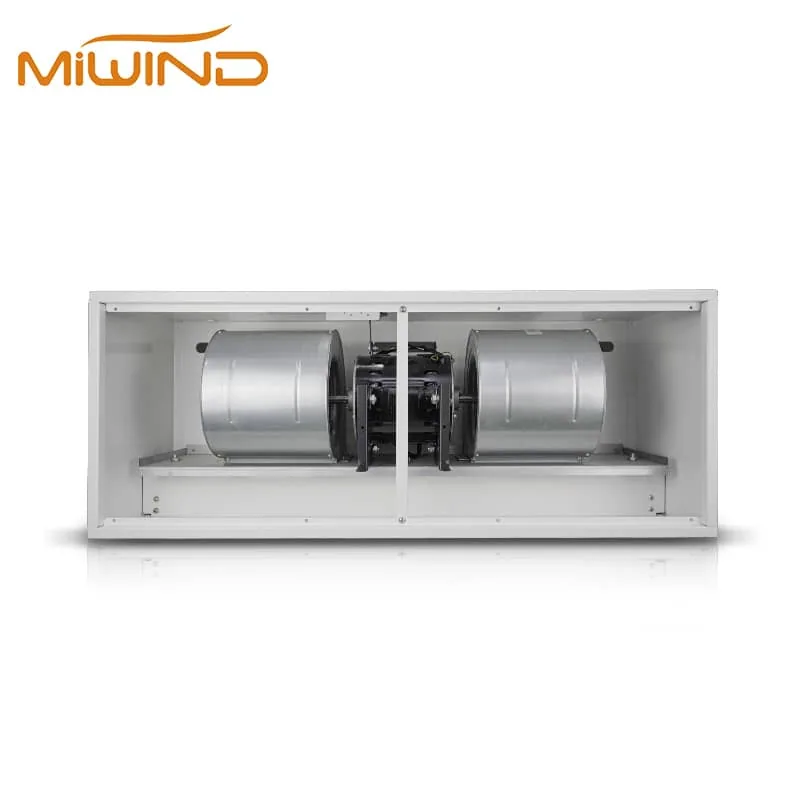
For dock-door dimensions, organize inputs with the air curtain sizing calculator. For larger service openings, compare the industrial air curtain series.
general airflow support matters more
If the loading area feels hot, stagnant, or uneven after the dock opening is closed, the next conversation may be about general airflow support. In that case, room or zone dimensions, target air movement, duct route, service access, and electrical availability often matter more than the door size.
This is where inline duct fans or other airflow-support equipment can help organize the zone. The goal is not to treat every warehouse like an office ventilation problem. The goal is to define what air movement the specific loading zone is missing and whether the duct path and installation conditions can support it.
When the request is really about warehouse fresh air systems, the review should move toward fresh-air CFM, filtration, ERV or HRV fit, and service access instead of a single exhaust fan answer.
Noise sensitivity, maintenance access, and mounting practicality should still be included. A loading bay may tolerate a more industrial equipment profile than a classroom, but poor service access or awkward installation will still become a problem later.
Duct fan selection should include target CFM, equivalent duct length, elbows, louvers, filters if any, dampers, termination, expected static pressure, controls, voltage, and whether the fan must be reachable from a lift or service platform.
For ducted airflow support, review MiWind inline duct fans. For duct-assist requests with known weak airflow, compare booster fan options. For outdoor-air or filtration-driven projects, review fresh air and ERV systems. For pressure-path inputs, use the duct fan selection guide.
Humidity in Airflow Review
Some loading areas are not only exposed to outdoor air. They also struggle with humidity spikes after door cycles, receiving traffic, or seasonal weather. In that case, airflow planning and moisture planning should stay connected. A zone that recovers poorly after humid deliveries may need both air movement and dehumidification support.
This is especially important where stored goods, packaging, or adjacent conditioned areas are sensitive to moisture. A loading zone that seems like a ventilation complaint on the surface may actually be a recovery problem in which moisture removal is part of the solution.
That does not mean every dock area needs a dehumidifier review. It means the operating pattern should decide whether humidity is just a symptom of door exposure or part of a larger environmental-control problem.
Ask whether humidity returns to target after receiving or stays elevated into the next shift. If recovery is slow, collect current RH, target RH, temperature range, door-open schedule, drainage option, and stored-goods sensitivity before selecting a dehumidifier path.
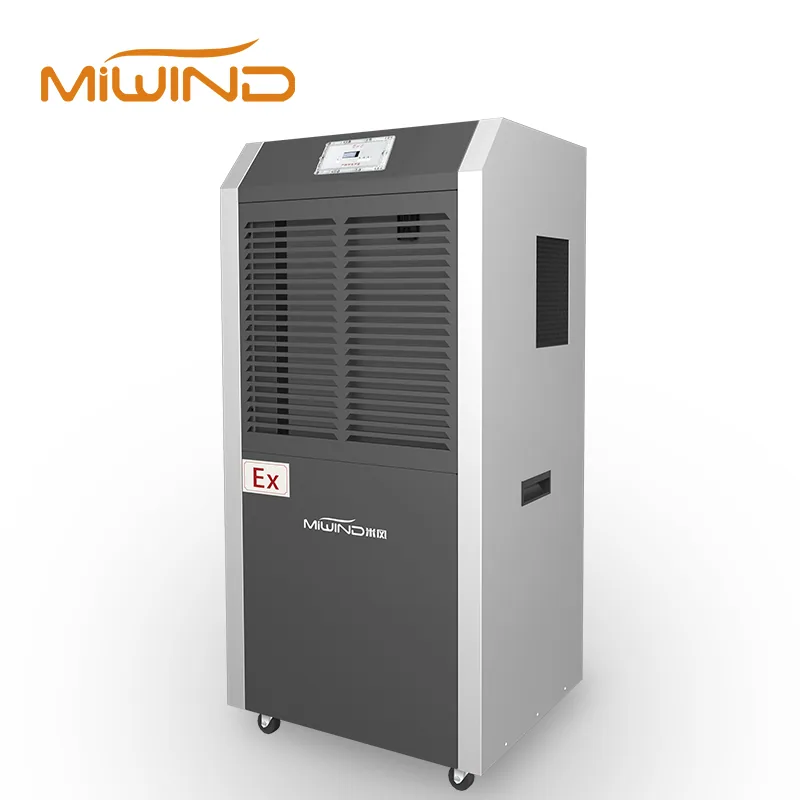
For humidity sizing context, use the dehumidifier sizing calculator. For early moisture-control ranges, reference the dehumidifier size chart.
to collect
A useful loading-area review should include the door size if the opening is part of the complaint, the approximate zone dimensions, whether the issue is infiltration or stagnation or humidity or a mix, and whether the problem becomes worse during receiving periods or certain weather conditions.
Photos help show whether the area is an exposed dock edge, an enclosed receiving bay, or a larger warehouse corner with mixed conditions. Service access, mounting position, and electrical availability should also be captured early because loading-area equipment often has to work around existing structure and traffic paths.
If forklifts, dock equipment, shelving, or pallet staging limit installation space, include that in the notes. A technically suitable fan or air curtain can still be a poor selection if it cannot be mounted, wired, protected, or serviced safely.
- Record the dock or service opening size when the door is part of the complaint.
- Estimate the affected zone, not only the total building volume.
- Note when the problem is worst: open doors, delivery periods, or humid weather.
- Document mounting and service constraints with photos.
- Separate door-control, zone-airflow, and moisture-recovery notes in the RFQ.
A professional way to structure the next step
The best warehouse airflow requests do not ask for the best fan in the abstract. They describe whether the issue is doorway exposure, weak circulation, humidity recovery, or a combination. That is what lets the reviewer connect the zone to air curtains, duct fans, or moisture-control equipment without forcing the whole problem into one equipment family too early.
That kind of review is what turns the article from general guidance into a usable decision guide. It helps the buyer understand what to measure, what to photograph, and what to compare before product discussion becomes detailed.
Send dock dimensions, zone dimensions, target CFM or ACH basis, door traffic, exposure, duct route, static-pressure inputs, humidity readings if available, voltage, controls, mounting photos, and service-access notes.
Loading-area airflow guidance supports early product selection. Final product direction depends on door condition, zone behavior, installation constraints, and model-level technical review.
When the field package is ready, request a warehouse airflow equipment selection.