
Occupancy swing
With six people in the morning, the training room feels fine. When 24 employees arrive for back-to-back sessions, the same room turns warm and stale before the schedule breaks.
Office and classroom fresh air planning for changing occupancy starts with that pattern, not just floor area. Peak occupancy, room volume, CFM, ACH, existing duct paths, filter access, controls, service clearance, and ERV/HRV fit all belong in the first review.
Diagnose the occupancy pattern
Offices, classrooms, training rooms, and conference rooms rarely behave like static spaces. A room can operate at low background occupancy for hours, then jump to a people load that changes temperature, odor, CO2 perception, and recovery time after the session ends.
That is why the first worksheet should capture typical occupancy, peak occupancy, session length, recovery time between sessions, and whether the complaint appears during peaks or all day. A steady complaint points toward a base ventilation issue. A peak-only complaint may need better demand planning, scheduling awareness, or a fresh-air path that can support high-use periods.
Contractors and facility teams should also separate room freshness from thermal comfort. A stale room may need outdoor air and filtration review, while a warm room may also involve cooling capacity, solar gain, controls, or air distribution issues outside the fan selection itself.

For the room-level application checklist, review office and classroom ventilation inputs. For early airflow planning, start with the ventilation CFM calculator.
Convert people load into CFM and ACH context
CFM and ACH are both useful, but they answer different questions.
For a changing-occupancy room, calculate the room volume from area and ceiling height, then compare typical and peak use. A room that looks acceptable at background occupancy may need a different review when peak load lasts 60 to 90 minutes and the next group arrives immediately afterward.
The goal is not to force one universal ACH target into every room. The goal is to create a defensible airflow discussion that the project engineer, contractor, or distributor can connect to equipment and duct reality.
| Room behavior | Planning risk | What to calculate |
|---|---|---|
| Short meetings with recovery time | Peak airflow may be less demanding if the room can recover. | Typical CFM, peak CFM, and recovery interval |
| Back-to-back classroom sessions | Fresh-air lag can accumulate across the day. | Peak occupancy CFM and ACH comparison |
| Training room with variable headcount | The room may need control flexibility. | Low-use and peak-use airflow ranges |
| Room feels stale all day | Base ventilation may be weak, not only peak response. | Continuous airflow path and existing supply/exhaust notes |
To compare room volume against airflow, use the CFM to ACH calculator. For benchmark language during early planning, keep the ventilation CFM chart.
ERV HRV Decision
When the main problem is planned outdoor air for occupied rooms, fresh-air and energy-recovery equipment selection becomes more relevant. An ERV or HRV path may be considered when outdoor air volume, climate behavior, humidity goals, energy recovery, filter access, duct route, and service clearance need to be evaluated together.
The ERV-versus-HRV question should stay tied to project details. Avoid assuming a recovery type from geography alone. The better RFQ describes indoor humidity goal, outdoor air conditions, room use, airflow target, duct routing, condensate or drain considerations where applicable, controls, and filter maintenance access.
Some rooms may not need a dedicated recovery unit. A simpler ducted fresh-air path, inline fan support, or building-system adjustment may be the right starting point when the airflow target is modest and existing infrastructure can be used. Final direction should remain model-level.

For product-family context, compare MiWind fresh air and ERV systems. For recovery-type language, read the ERV vs HRV guide. For early equipment direction, complete the ERV/HRV selection worksheet.
Check filters, ducts, controls, and service access early
Fresh-air planning often fails when maintenance details are treated as late-stage coordination. Filters add pressure drop and need replacement access. Duct routes add external static pressure and may limit where equipment can be mounted. Controls decide whether the room runs continuously, by schedule, or in response to occupancy.
For schools, offices, and training rooms, service access is not cosmetic. A unit above a finished ceiling, behind stored materials, or without clear filter direction can create maintenance problems that eventually reduce airflow. Filter access should be visible before procurement, not discovered during installation.
Duct pressure also affects fan direction. If the route is long, has multiple elbows, or includes filters and grilles, the project may need inline fan or cabinet-style review in addition to fresh-air equipment selection.

For ducted support airflow, compare MiWind inline duct fans. For pressure-path terminology, reference the duct fan selection guide.
Build the room schedule
A useful fresh-air RFQ looks more like a room schedule than a one-line product request. It should identify each room, area, ceiling height, typical occupancy, peak occupancy, use pattern, hours of operation, complaint timing, existing supply or exhaust points, available outdoor-air route, and maintenance access.
For changing-occupancy projects, include at least two operating points: normal use and peak use. If the room has repeated cycles, include session length and recovery time. If the building has different room types, avoid forcing one equipment answer across all rooms without checking how each room is actually used.
Photos help. Include ceiling space, existing diffusers or grilles, nearby exterior walls or roof access, mechanical room space, filter service direction, and any known duct constraints.
- Room area, ceiling height, and room volume
- Typical occupancy, peak occupancy, session length, and recovery time
- Current complaint: stale air, odor, heat, stuffiness, or slow recovery
- Existing supply, exhaust, return, and available outdoor-air route
- Filter access, service clearance, ceiling space, and duct route
- Controls expectation: continuous, scheduled, manual, or occupancy-responsive
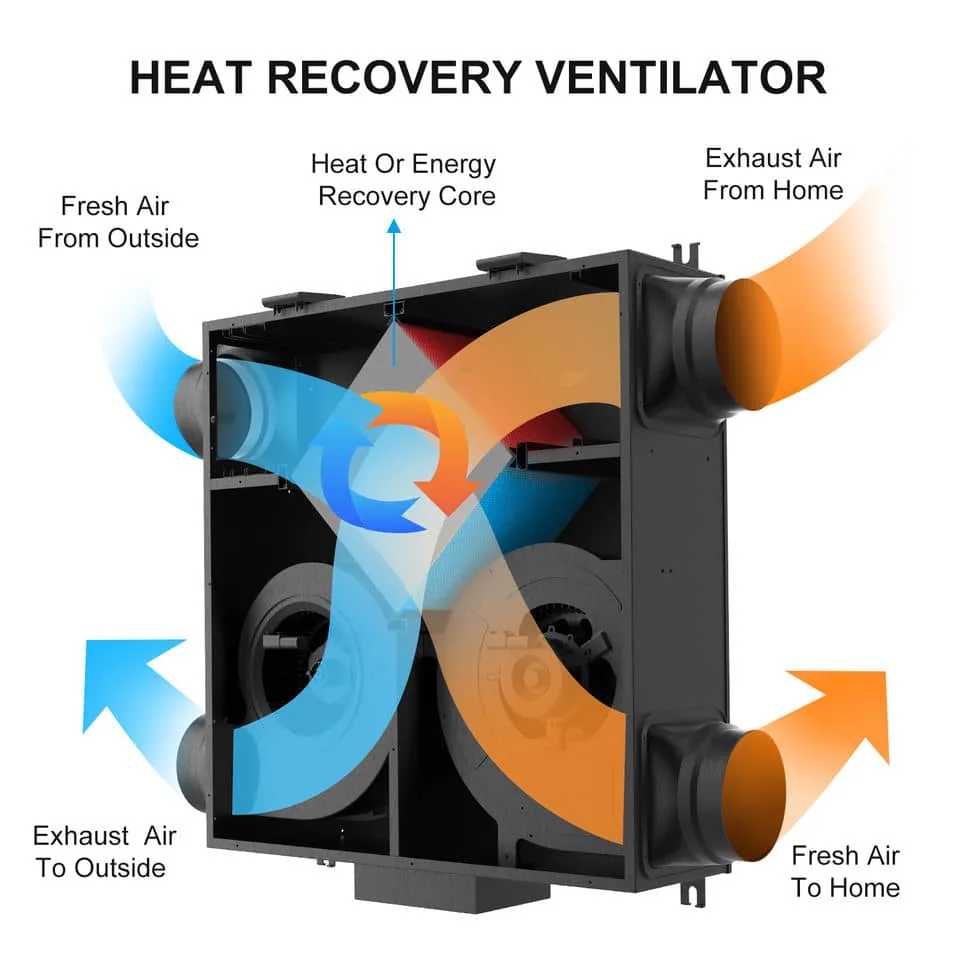
When the room schedule and photos are ready, request a fresh-air equipment selection. For common terminology in the brief, use the air movement glossary.
Fresh-air planning handoff
Office and classroom fresh air planning should start with changing occupancy, not square footage alone. Peak headcount, room volume, session length, recovery time, filter pressure, duct route, controls, and service access all shape the equipment direction.
A disciplined review separates rooms that need stronger base ventilation from rooms that mainly struggle during scheduled peaks. From there, ERV/HRV, ducted fresh air, inline fan support, or building-system adjustment can be reviewed with project-specific data.
Fresh-air planning for occupied rooms should remain tied to room schedule, airflow math, service access, and model-level equipment selection.
Estimate airflow with the ventilation CFM calculator. Compare recovery options with the ERV/HRV selection worksheet.