
Winter entrance complaint
The same storefront that feels fine in spring becomes a staff complaint in January. Customers pause at the threshold, the counter position gets cold, and the owner asks whether heat should be built into the air curtain quote.
Do not answer that from door size alone. Separate two jobs first: air separation across the opening and comfort support for people who stand near the entrance.
Separate separation duty from comfort duty
A heated vs unheated air curtain decision usually starts when a retail entrance creates a comfort complaint: customers feel a cold draft near the door, staff work beside a chilly threshold, or the entrance loses conditioned air during repeated door cycles. The selection question is not whether heat is automatically better. It is whether the doorway problem requires air separation only, comfort support, or both.
Both heated and unheated air curtains are reviewed around door width, mounting height, exposure, traffic, voltage, and controls. The heated version adds a comfort layer, but it also adds electrical load, control coordination, and model-level checks that should be confirmed before a contractor or procurement team quotes the project.
For a buyer, the decision should be written as an entrance comfort brief: who feels the draft, where they stand, how often the door opens, what heat source already serves the zone, and what electrical capacity is available at the header.
- Use unheated review when the goal is separation, insects, dust, or general doorway airflow.
- Use heated review when people complain about cold drafts near the entrance.
- Confirm voltage, phase, circuit capacity, door switch, and control expectation before narrowing the model path.
- Keep doorway comfort separate from full building heat-load responsibility.

For door width and mounting inputs, start with the air curtain sizing calculator. For customer-facing doorway context, review the retail entrance application path.
Diagnose separation need versus heat need
The common mistake is to treat heating as the premium version of the same product. In practice, heating belongs to the entrance brief. If the project mainly needs an air barrier during door cycles, an unheated commercial air curtain may be the more disciplined starting point. If the entrance creates a cold zone where customers or staff remain, heated review should enter the conversation early.
Climate and traffic change the decision. A customer-facing door in a cold region may justify heated review even when the opening is not exceptionally large. A back-of-house service door in the same building may only need separation if people do not stay near the threshold.
Do not make the heating decision from outdoor temperature alone. Review occupancy near the door, vestibule condition, how long the door stays open, whether the building HVAC already tempers the zone, and whether controls can prevent unnecessary heater operation.
unheated review is usually enough
Start with unheated review when the door is interior, vestibule-protected, warm-climate, or mainly used for insect, dust, odor, or general air-separation control. The review still needs door width, mounting height, traffic, and controls.
heated review belongs early
Start with heated review when the owner is trying to improve comfort at a cold entrance, protect staff working near the doorway, or reduce repeated cold-draft complaints in the customer zone. The review should include electrical capacity before the project team assumes a heated unit is practical.
building heat should handle the load
If the entrance is cold because the space heat is undersized, poorly balanced, or not delivered near the door, an air curtain should not be treated as the whole heating fix. The air curtain can support doorway comfort, but the building HVAC strategy still needs its own review.
| Project condition | Review heated | Review unheated |
|---|---|---|
| Customer comfort at a cold entrance | Yes | Only if heat is handled elsewhere |
| Insect or dust reduction focus | Only if comfort is also required | Often appropriate |
| Limited electrical capacity | Check carefully before quoting | Usually simpler |
| Cold-climate exterior door | Often worth review | Possible if separation is the only goal |
| Interior opening | Usually not required | Often appropriate |
Size the doorway, then check electrical fit
Door width still sets the coverage starting point. Mounting height, exposure, traffic, and header clearance decide whether the doorway belongs in a compact entrance review, a heavier commercial air curtain selection, or a heated model selection. Heating does not remove the need for correct air curtain sizing.
Heated units require earlier electrical review. Voltage, phase, available circuit capacity, control method, door switch expectation, and installation clearance can decide whether a heated model is practical. If the building cannot support the electrical load, the review may need to move back to an unheated model or a separate heating strategy.
Controls should be discussed before purchase. A door switch, remote controller, thermostat coordination, or building-control interlock can change wiring and commissioning expectations. Procurement should request model-level wiring and control documentation rather than assuming all heated units install the same way.
- Measure finished door width and mounting height before comparing heated or unheated units.
- Confirm available voltage and phase before choosing a heated series.
- Check whether door activation, remote control, or building controls are expected.
- Ask for model-level heating and electrical data before using it in a submittal or quote package.
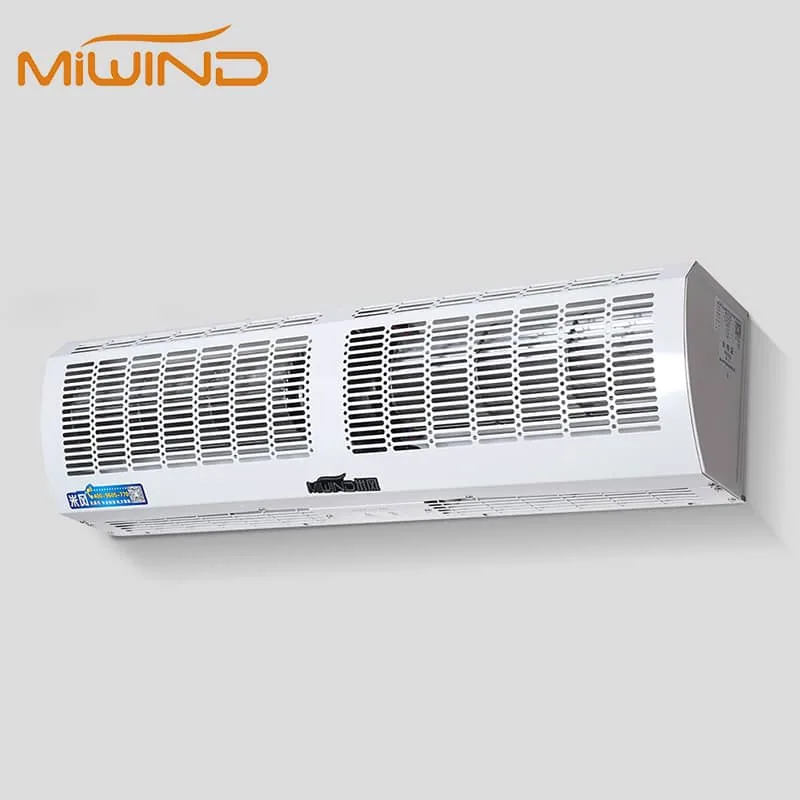
For a heated equipment path, review the A3 heated air curtain series. For early doorway planning, use the air curtain sizing chart.
Equipment recommendation path
For a 36 inch customer-facing door in a cold climate, begin with door coverage and mounting height, then decide whether the complaint is comfort near the doorway or general air separation. If staff or customers remain near the threshold and the building has suitable electrical capacity, heated review may be appropriate. If the door opens occasionally and the goal is basic separation, unheated review may be the cleaner path.
For distributor communication, prepare the same core package either way: door width, clear opening height, mounting height, exposure, traffic frequency, voltage, control expectation, heating goal, and site photos. That information lets the reviewer compare the request against series limits and installation details without treating heat as a shortcut around the doorway review.
If the RFQ is for multiple doors, separate them by duty. A front entrance, service door, vestibule interior door, and receiving door may each need a different heated or unheated review even within the same facility.
A heated air curtain should be treated as doorway comfort support, not as the primary building heating system.
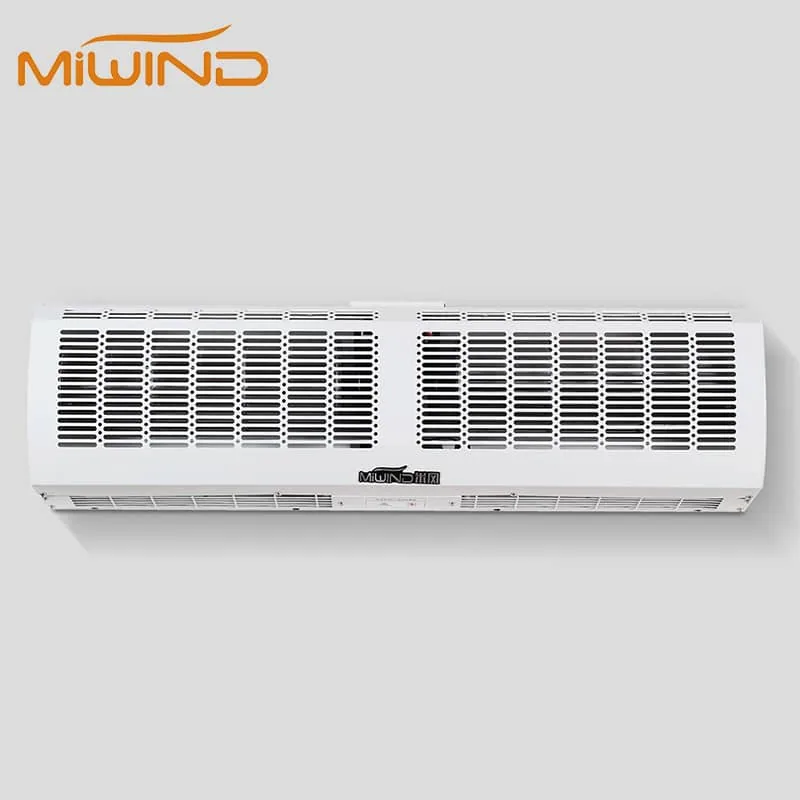
For non-heated and heated comparisons, browse MiWind air curtain products.
Heating decision
Choose heated or unheated air curtains by separating the project goal from the product feature. If the doorway needs separation only, start with unheated air curtain sizing. If the entrance creates a comfort problem in a cold customer or staff zone, add heated review after voltage, controls, and electrical capacity are confirmed.
Use the calculator to organize the doorway inputs, then send dimensions, photos, voltage, heating preference, quantity, and timeline with an RFQ.
Organize the doorway package with the air curtain sizing calculator. When voltage, controls, and photos are ready, request a heated or unheated air curtain selection.