
Kitchen-adjacent support zone
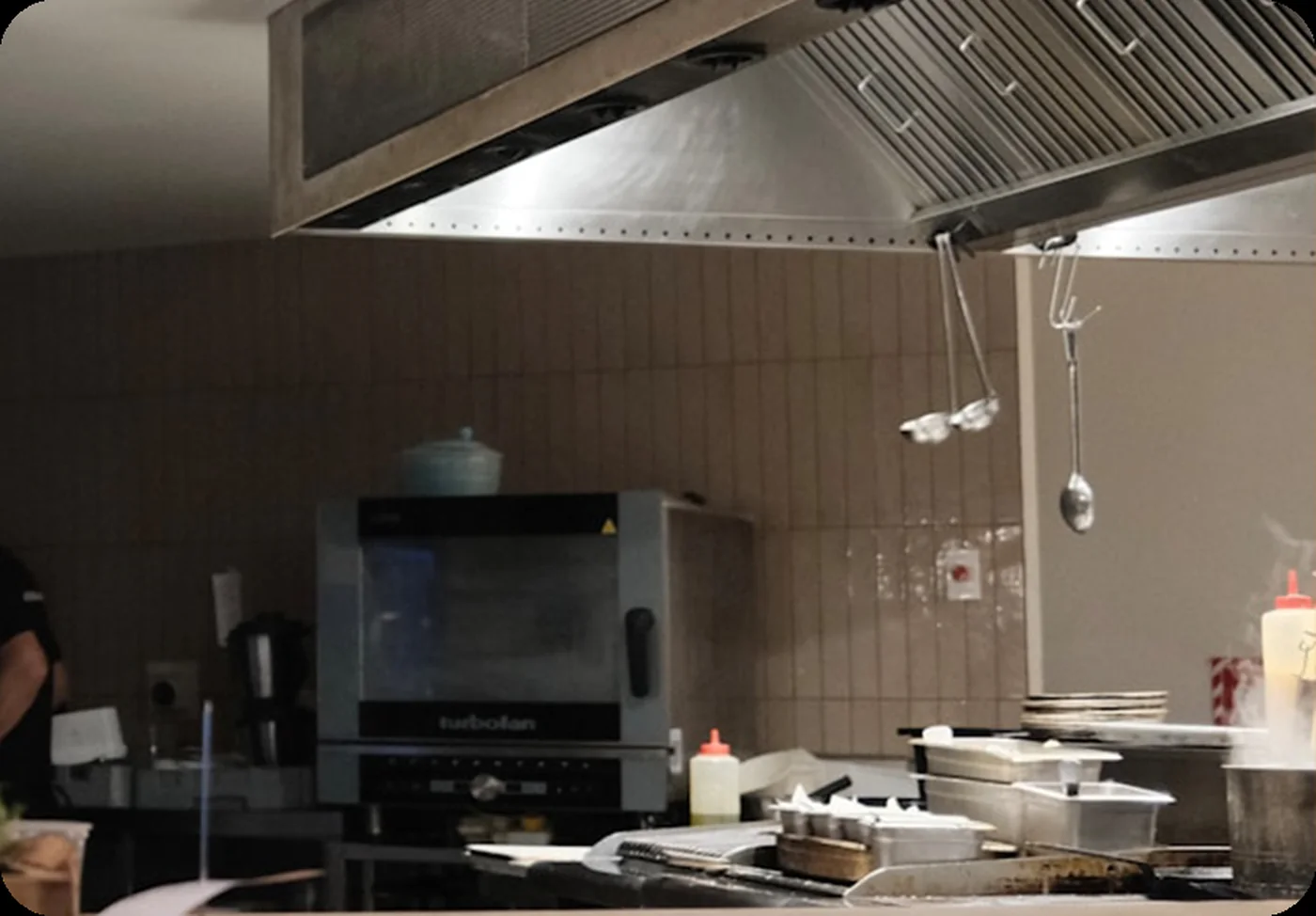
After lunch service, the back corridor stays hot, odors drift toward storage, and the exterior service door pulls inward when exhaust equipment runs. The hood may be doing its job; the adjacent support zone is the part that has not been named clearly.
Commercial kitchen support airflow should define the room or doorway problem first, then review CFM, pressure path, door separation, makeup-air symptoms, support fans, and RFQ inputs without pretending to redesign the code-governed hood system.
Separate hood design from support-airflow problems
Commercial kitchen airflow gets confusing when every complaint is described as a hood problem. Hood capture, grease exhaust, fire safety, and code-governed kitchen exhaust belong with the project engineer, hood designer, and local authority. Support airflow around the kitchen is a narrower equipment discussion.
Support airflow may involve a hot corridor, a stale prep room, a wash area, a service doorway, a storage room, or a pressure relationship between adjacent spaces. These areas can need airflow review without changing the hood system itself.
The first step is to name the failing zone. Is the problem heat, odor, negative pressure, stale air, doorway discomfort, or slow clearing after service? Once the symptom is localized, inline fans, exhaust fans, air curtains, and fresh-air paths can be reviewed in the right lane.
For application boundaries, review commercial kitchen support airflow inputs. For dining and service-area balance symptoms, compare restaurant ventilation applications.
Map where support airflow usually appears
Kitchen-adjacent complaints usually appear at edges and transitions: service corridors, prep rooms, wash areas, back storage, exterior service doors, pass-throughs, or doorways between conditioned and hot zones. Each location points to a different equipment direction.
A stale prep room may need CFM and duct routing. A hot corridor may need exhaust or transfer-air review. A service door with heat spill may need air curtain sizing. A hard-to-open exterior door may point to room balance or makeup-air review rather than a stronger support fan.
This mapping keeps the equipment recommendation practical. The product role becomes specific instead of a broad request for a larger fan.
| Observed condition | Likely review lane | Inputs to collect |
|---|---|---|
| Hot prep or service corridor | Support ventilation | Room size, heat source, hours, CFM target, discharge path |
| Stale wash or storage room | Secondary exhaust or duct fan | Room volume, odor source, duct length, static pressure |
| Doorway heat or odor transfer | Air curtain or door-separation review | Door width, mounting height, traffic, voltage, exposure |
| Hard-to-open exterior door | Room balance or makeup-air review | Exhaust changes, replacement-air path, door symptoms |
For room airflow estimates, start with the ventilation CFM calculator. For makeup-air warning signs, read when restaurant ventilation needs makeup air review.
Duct Fan Role
Inline and exhaust fans can support kitchen-adjacent spaces, but only after the fan role is clear. Is the fan moving stale air out of a prep room, transferring air between support zones, exhausting a small utility area, or helping distribute replacement air? The answer changes duct path, controls, pressure check, and service access.
For kitchen exhaust fans ceiling mount or ceiling mounted kitchen exhaust fan questions, separate a secondary room exhaust fan from any hood, grease exhaust, or code-governed kitchen exhaust path before equipment selection.
A support fan selection should include target CFM, duct diameter, duct length, elbow count, filters or grilles, dampers, termination type, voltage, controls, noise sensitivity, and whether the fan can be serviced after installation.
If the support fan is connected to or interacts with hood exhaust, fire-rated assemblies, grease-laden air, or code-governed exhaust paths, pause the duct fan selection and coordinate with the project engineer and local authority.
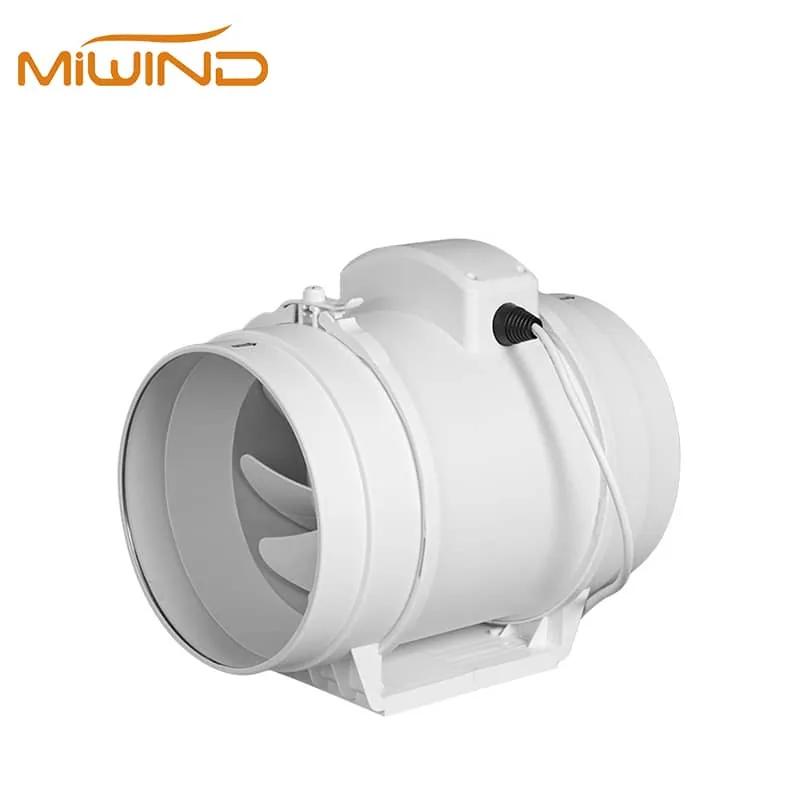
For ducted support equipment, compare MiWind inline duct fans. For static pressure inputs, organize the route with the duct fan static pressure estimator. For pressure and accessory language, reference the duct fan selection guide.
Review door separation
Air curtains can belong in kitchen-adjacent projects when the problem sits at a doorway: heat spill, odor movement, flying-insect pressure, comfort complaints, or separation between a hot service zone and an adjacent occupied or storage space.
The review still needs doorway details. Door width, clear height, mounting height, header clearance, traffic frequency, opening duration, adjacent room condition, voltage, controls, and whether the door is interior or exterior all shape the selection.
An air curtain should not be framed as a hood-design substitute. It is a doorway separation tool that may support comfort and zone control when the opening conditions are appropriate and the product is checked against exact model values.
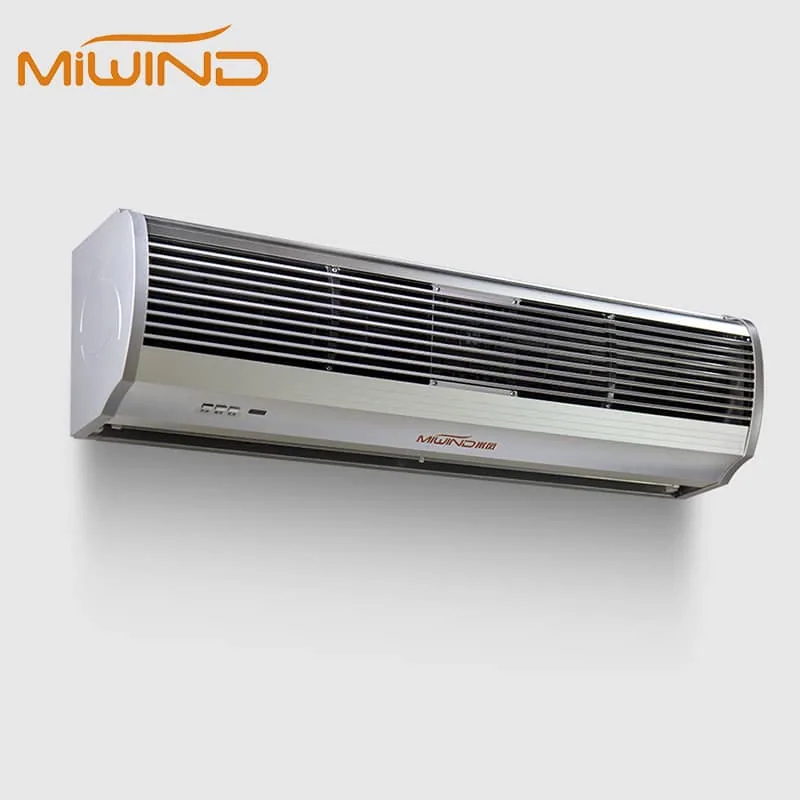
For restaurant-door equipment context, review the A5 restaurant air curtain series page. For doorway dimensions and mounting inputs, use the air curtain sizing calculator.
Use planning tools inside their lane
Planning tools help when they organize support-airflow inputs instead of replacing engineering. A CFM calculator can frame a secondary room airflow target. A duct-pressure estimator can organize a support fan route. An air-curtain calculator can collect doorway dimensions and mounting conditions.
They do not design hoods, validate code compliance, calculate fire-safety requirements, or approve grease exhaust. Kitchen projects can cross those boundaries quickly, so the article should keep support equipment and hood design separated in the buyer's mind.
The strongest output from these tools is a cleaner RFQ: which zone has the issue, what airflow or doorway inputs are known, what photos are available, and where the review must involve the project engineer.
Commercial kitchen support-airflow planning does not replace hood design, code review, fire-safety review, or project engineering.
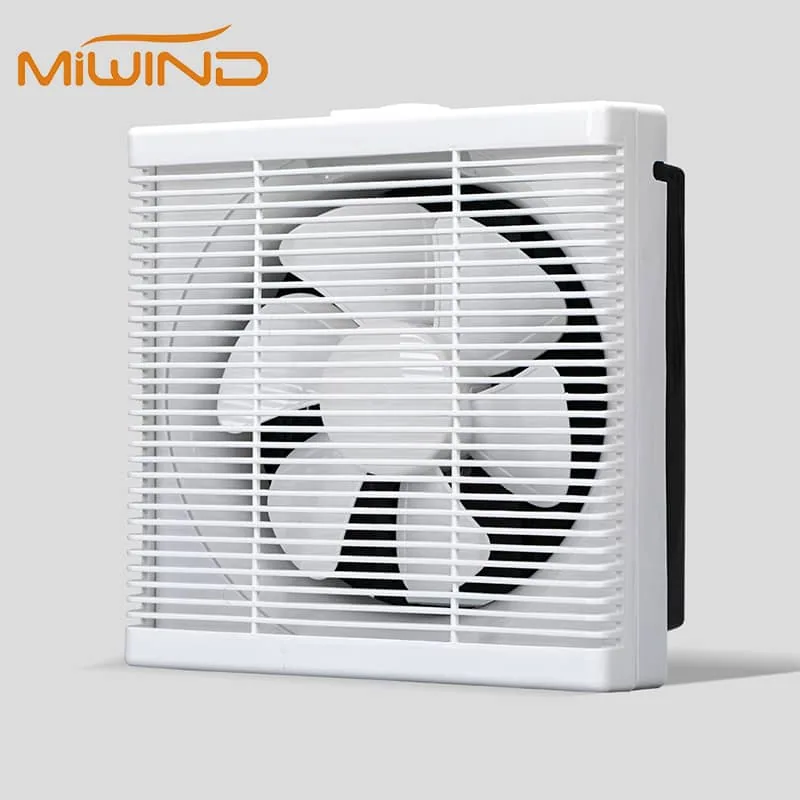
For secondary room exhaust options, review MiWind exhaust fans. For airflow reference values, compare against the ventilation CFM chart.
Prepare a support-airflow RFQ
Name the exact room or opening before naming the product. Describe whether the issue is heat, odor, stale air, negative pressure, doorway discomfort, or slow clearing. Include room size, ceiling height, operating hours, existing fans, duct route, door dimensions, and whether the issue appeared after equipment changes.
Photos should show the kitchen relationship to the problem zone: service corridor, prep room, wash area, storage room, doorway, exterior service door, duct route, and any existing fan or grille. If makeup-air symptoms exist, include door behavior and when exhaust equipment is running.
If a hood contractor, engineer, or local authority is already involved, include their airflow notes or constraints. That makes it clear which parts of the project are support equipment selection and which parts require engineered kitchen exhaust review.
- Problem location: corridor, prep room, wash area, storage room, or doorway
- Complaint type: heat, odor, stale air, negative pressure, or threshold discomfort
- Room dimensions, door dimensions, traffic, and operating schedule
- Known CFM, duct diameter, duct length, elbows, grilles, dampers, and termination
- Existing hood, exhaust, or makeup-air notes if they affect the support zone
- Photos of the room relationship, duct path, fan location, and service access
When the support zone and photos are ready, request a commercial kitchen airflow support review. For shared terminology in the brief, reference the air movement glossary.
Support airflow handoff
Commercial kitchen support airflow works best when the team separates hood design from adjacent-room and doorway problems. Hood capture and code-governed exhaust stay with the project engineer and authority. Support airflow can then be reviewed by room, doorway, CFM, static pressure, controls, and service access.
That separation helps buyers choose whether the next conversation is about a duct fan, exhaust fan, air curtain, makeup-air review, or engineered hood system coordination. It keeps equipment recommendations practical and reduces the risk of asking one product to solve the wrong problem.
Support-airflow equipment should be selected around the specific adjacent-zone condition and exact model values, not as a substitute for hood design.
Estimate support-zone airflow with the ventilation CFM calculator. For doorway symptoms, collect dimensions in the air curtain sizing calculator.