
Stale or damp storage
The storage room smells stale every morning, cardboard boxes feel soft, and a spot RH reading shows 68 percent after a humid weekend. A fan may help one part of that complaint and miss the other.
Storage room ventilation vs dehumidification should begin with room behavior, moisture source, RH target, and whether outdoor air will help or make the load worse. The storage room ventilation and dehumidification decision is whether the room lacks air exchange, lacks moisture removal, or needs both coordinated around drainage, duty cycle, duct path, and service access.
Treat this as storage ventilation planning first. The same diagnostic path applies to utility room ventilation and storage building ventilation when odor, trapped heat, damp materials, or weak air exchange are the symptoms.
Diagnose stale air separately from moisture load
Storage rooms can fail in two different ways. A room may have stale air because it has little supply or exhaust path, poor mixing, or trapped odors from stored materials. A different room may have a real moisture load from seasonal humidity, slab moisture, wet products, drainage limits, or repeated door openings.
Those problems can overlap, but they should not be treated as the same diagnosis. Ventilation moves air and can remove odor or heat when there is a useful discharge path. Dehumidification removes moisture from the room air and needs capacity, drainage, temperature fit, and service access.
Document room area, ceiling height, RH readings, temperature, odor, visible condensation, damp surfaces, stored-material sensitivity, and whether the problem improves after the door is left open. That small worksheet often prevents the wrong first equipment purchase.

For room-level inputs, review basement and storage moisture-control applications. For airflow planning, start with the ventilation CFM calculator.
ventilation should be reviewed first
Ventilation review becomes the first path when the main complaint is stagnant air, lingering odor, trapped heat, or a room with no practical exhaust or transfer-air path. This is common in storage rooms behind closed doors, utility rooms with equipment heat, or back-of-house storage zones that rarely exchange air with adjacent spaces.
Utility room ventilation and storage building ventilation should still start with the same field notes: room volume, heat or odor source, discharge route, replacement-air path, duct resistance, and whether stored materials are moisture-sensitive.
The airflow discussion should use CFM and ACH context. CFM describes the airflow volume; ACH relates that airflow to the room volume. A storage room does not need a marketing claim about fresh air. It needs a reviewable airflow target, discharge path, make-up path, duct length, elbows, termination, and fan access.
Ventilation can become a poor answer if it brings in humid outdoor air without moisture control. In humid seasons or below-grade spaces, the project should ask whether the replacement air improves the room or adds to the dehumidifier load.
| Observed condition | Likely first review | What to verify |
|---|---|---|
| Stale odor with no visible dampness | Ventilation | CFM, ACH, exhaust path, and replacement-air route |
| Heat buildup near equipment | Ventilation or exhaust support | Heat source, operating hours, duct path, and fan access |
| Detached or low-use storage building | Storage building ventilation | Outdoor-air humidity, air path, stored goods, and service access |
| Room improves when door is open | Air exchange review | Transfer path, grille options, and discharge route |
| Outdoor air is humid | Combined review | Ventilation benefit versus added moisture load |
To compare airflow against room volume, use the CFM to ACH calculator. For ducted fan selection language, keep the duct fan selection guide.
dehumidification should lead the review
Dehumidification should lead when RH stays high, moisture returns after brief drying, cardboard softens, labels curl, metal surfaces show condensation risk, or stored goods are sensitive to moisture. In those cases, the room is not only stagnant; it has a moisture load that must be removed.
A storage room dehumidifier request should describe current RH, target RH, temperature range, moisture source, drainage path, operating schedule, and whether ventilation is adding humid outdoor air.
The useful sizing inputs are room area, ceiling height, current RH, target RH, temperature, moisture source, duty cycle, drainage route, and whether doors open to humid spaces. A pints-per-day capacity number only makes sense when those conditions are visible.
Drainage and service access are part of sizing. A dehumidifier that has enough capacity on paper but no reliable drain path, poor airflow clearance, or awkward filter access can become a maintenance problem before it becomes a moisture-control solution.
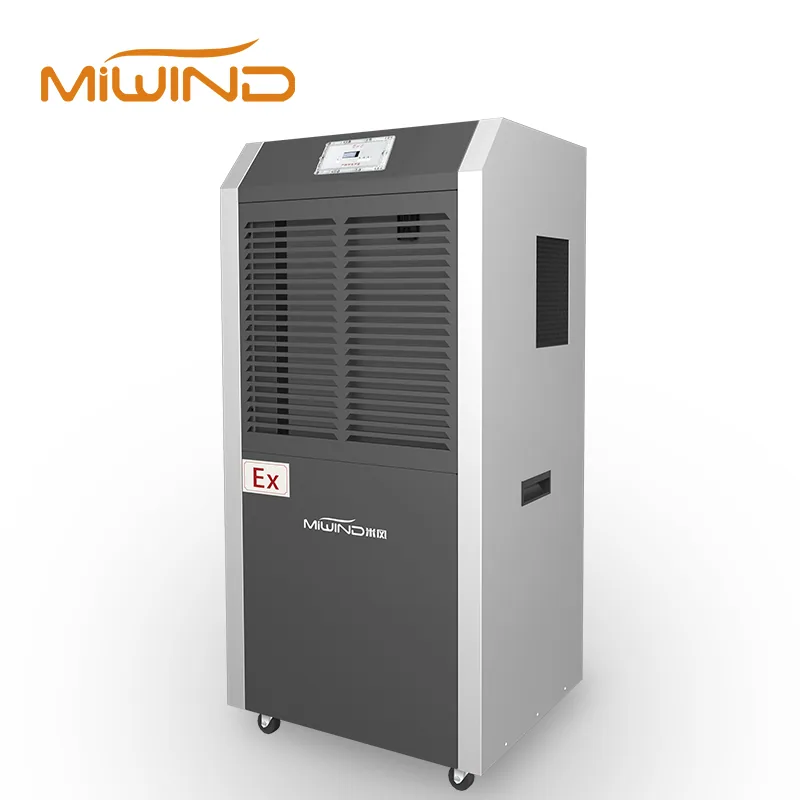
For capacity inputs, use the dehumidifier sizing calculator. For practical capacity ranges and caution notes, compare the dehumidifier size chart. For equipment choices, review MiWind dehumidifiers. If the unit runs constantly but the room still stays damp, compare signs a commercial dehumidifier is undersized.
the room needs ventilation and dehumidification together
A combined review is appropriate when the room is both stale and damp, when one zone recovers slowly after humid periods, or when ventilation helps odor but RH remains above the target range. In these projects, ventilation and dehumidification should be coordinated rather than selected as unrelated machines.
Airflow can distribute dry air and remove odor, while dehumidification controls the moisture load. But if the ventilation path introduces humid air, the dehumidifier may need more capacity or longer duty cycle. If the dehumidifier runs in a stagnant corner, the room may still feel uneven.
The better review maps airflow path and moisture path together: where air enters, where it leaves, where moisture originates, where condensate drains, and where service access is realistic.
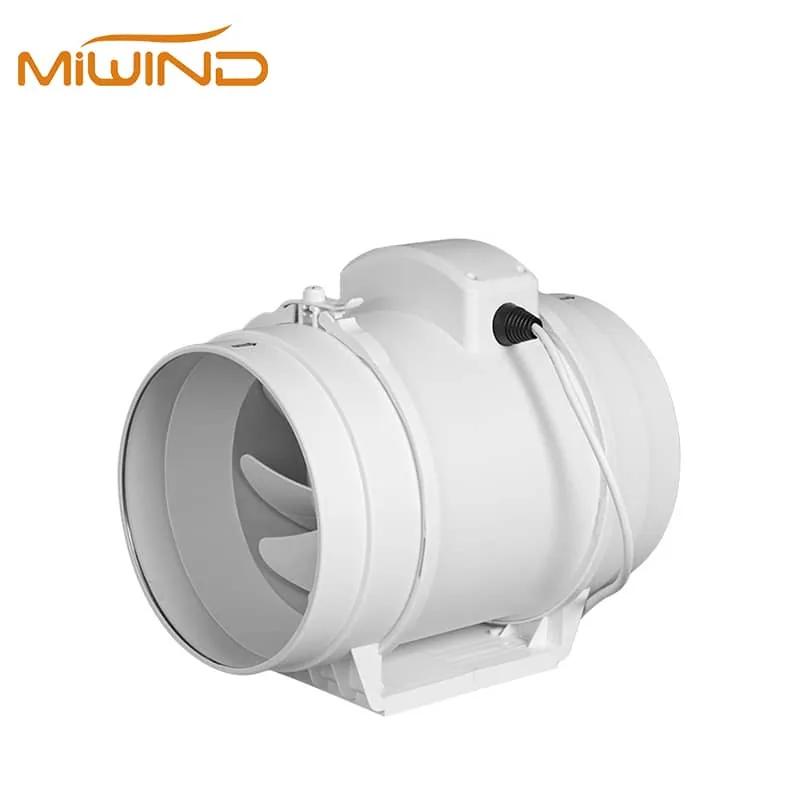
For ducted airflow equipment, compare MiWind inline duct fans. For broader warehouse and storage-zone context, review warehouse ventilation applications.
Storage ventilation checklist
A strong storage-room RFQ describes the room, the moisture pattern, and the air path. Include area, ceiling height, approximate volume, current RH, target RH, temperature range, moisture source, stored goods, drainage availability, existing fan or duct notes, and whether the room has intake or transfer-air paths.
Add photos of the room corners, floor drain, existing vents, door undercut or transfer grille, exterior wall or duct route, and any damaged stored materials. If the problem changes by season, include the month and weather condition when it is worst.
This evidence helps the reviewer decide whether the first path is ventilation, dehumidification, or a coordinated design with both. It also helps avoid oversizing a fan for a moisture problem or undersizing a dehumidifier for a humid ventilation path.
- Room area, ceiling height, and approximate volume
- Current RH, target RH, temperature, and seasonal pattern
- Moisture source: slab, door openings, wet products, drainage, or outdoor air
- Stale-air symptoms: odor, trapped heat, poor mixing, or no discharge path
- Existing duct, fan, grille, drain, and electrical access
- Photos of vents, drain path, storage damage, and service clearance
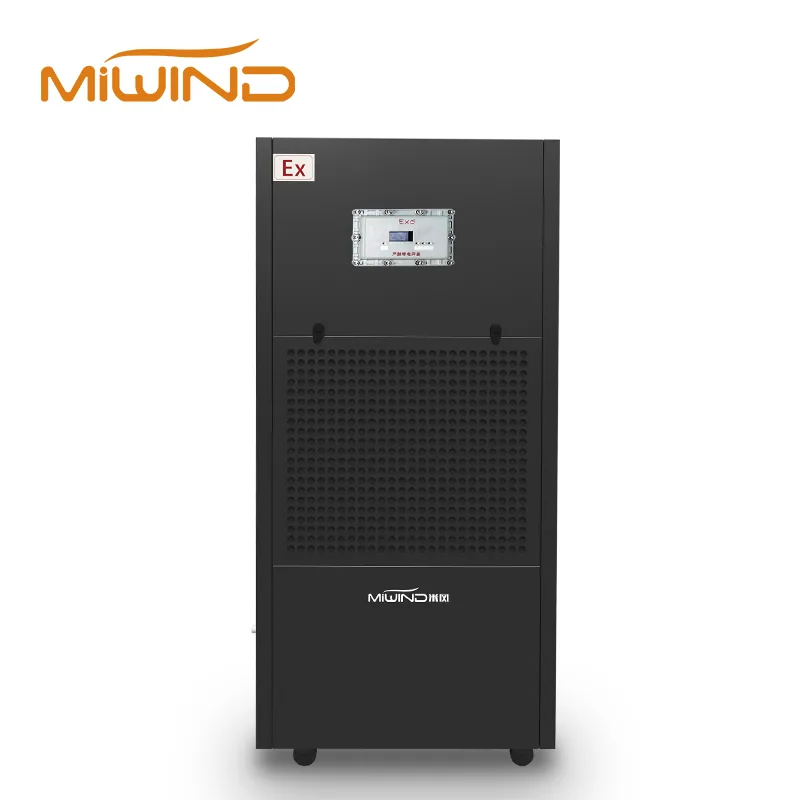
When room photos and RH notes are ready, request a storage room moisture-control review. For shared terms in the brief, reference the air movement glossary.
Room-condition decision
Storage room ventilation vs dehumidification is a diagnosis problem before it is a product problem. Ventilation fits stale air, odor, trapped heat, and weak air exchange. Dehumidification fits persistent high RH, condensation, damp materials, and moisture recovery problems.
Many storage rooms need both, but only after the room evidence supports it. The decision should connect CFM, ACH, RH, pints/day capacity, drainage, duct path, duty cycle, and service access before final equipment selection.
Storage-room planning should connect room behavior, moisture pattern, airflow path, and model-level equipment selection before procurement.
Estimate moisture-control inputs with the dehumidifier sizing calculator. Compare room airflow with the ventilation CFM calculator.