
CFM and ACH handoff
A small training room, restroom, and storage closet can land near the same airflow number on a worksheet. The complaints are completely different: people load, odor, and stale damp air.
Ventilation CFM vs ACH is useful only when the calculation is tied to room purpose, source control, duct path, and equipment selection. ACH answers how quickly room air volume changes; CFM answers what airflow the equipment path must deliver. Static pressure, sound, controls, filtration, and access decide whether the number can be delivered.
Define what each number answers
CFM is airflow volume: cubic feet per minute. It is the number most equipment discussions eventually need because fans, fresh-air units, and exhaust paths are selected around airflow at an operating point.
ACH is air changes per hour. It compares airflow to room volume, so it helps explain why a room with a high ceiling may need more CFM than a room with the same floor area and lower ceiling. ACH is useful for room comparison and early ventilation intensity, but it does not select a fan by itself.
For small commercial spaces, CFM and ACH should be used together. Small commercial ventilation handoff: room volume to ACH, target CFM, duct static pressure, and equipment family. Static pressure, duct path, noise, controls, and application context then determine whether the project points toward an exhaust fan, inline duct fan, fresh-air system, or recovery unit.

For the initial airflow target, start with the ventilation CFM calculator. For room-volume comparison, use the CFM to ACH calculator.
Use ACH to compare room volume and use pattern
ACH becomes useful when two rooms have different ceiling heights, different volumes, or different operating patterns. A 300-square-foot room with a 9-foot ceiling and the same room with a 14-foot ceiling do not contain the same air volume, so the same CFM produces different air-change intensity.
ACH also helps communicate early expectations across room types. A storage room with stale air, an office with changing occupancy, a restroom with odor and moisture, and a cafe seating area with people load all need different interpretation even when the arithmetic looks similar.
The limitation is source control. ACH does not remove a moisture source, solve a restroom odor path, or overcome a restrictive duct route by itself. It is a planning reference, not a final equipment decision.
| Planning factor | How ACH helps | What ACH cannot decide |
|---|---|---|
| Ceiling height and volume | Shows how room volume changes ventilation intensity. | Fan model, duct size, and static pressure |
| Occupancy pattern | Helps compare low-use and peak-use periods. | Control logic and fresh-air equipment type |
| Room behavior | Supports comparison of stale air or odor complaints. | Source control, discharge path, and service access |
| Early communication | Gives teams a shared room-level reference. | Final design, code compliance, or model approval |
For quick planning references, compare the ventilation CFM chart. For occupied rooms with variable schedules, read office and classroom fresh air planning.
CFM Equipment Selection
Once the room target is visible, CFM becomes the bridge to equipment. A bathroom exhaust path, a storage-room ventilation fan, a cafe fresh-air route, and a classroom ERV review can all start from CFM, but they diverge quickly by application.
Equipment selection needs delivered CFM at the expected resistance, not only a free-air number. Duct length, elbow count, filters, grilles, dampers, louvers, roof caps, wall caps, and termination details all affect the operating point.
That is why CFM should be paired with static pressure check when the project includes a duct run. If the duct path is unknown, the RFQ should say so and include photos so the reviewer can flag the missing data.
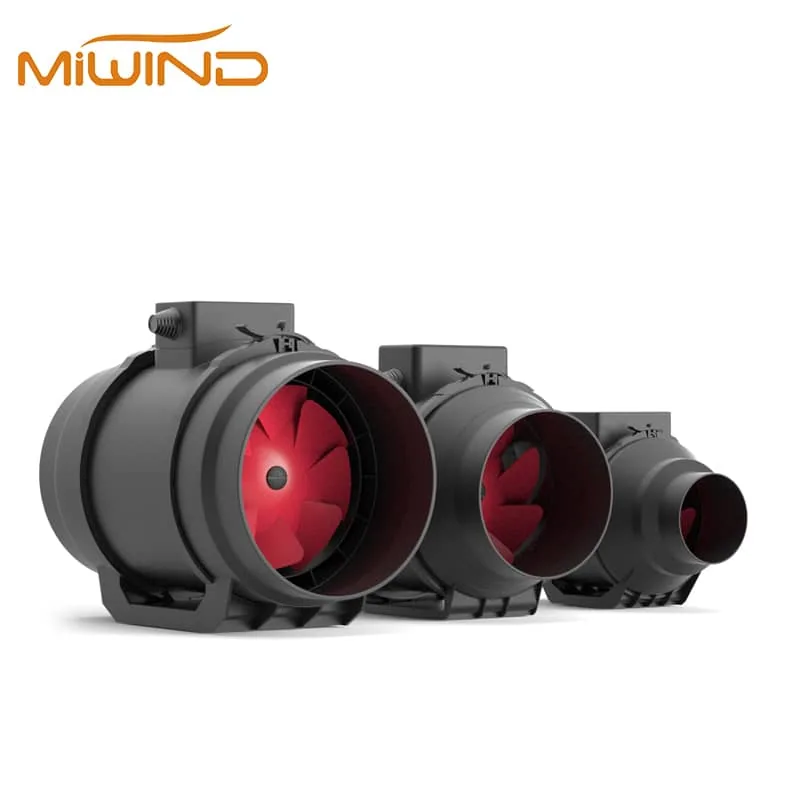
For ducted airflow equipment, compare MiWind inline duct fans. For duct pressure inputs, organize the route with the duct fan static pressure estimator. For ducted fan selection language, reference the duct fan selection guide.
Let application decide the equipment family
The same CFM and ACH context can lead to different equipment families. A restroom may need exhaust fan selection with sound and duct termination details. A classroom may need fresh-air or ERV/HRV selection check with filters and controls. A basement storage room may need ventilation, dehumidification, or both. A cafe may combine fresh air, exhaust support, and entrance airflow control.
That is the step buyers often skip. They calculate airflow, then jump to a fan type before naming the room problem. The better process is room purpose first, CFM and ACH second, duct and static pressure third, equipment family after that.
If the room has code-governed or engineer-specified ventilation requirements, those project requirements should lead. MiWind planning tools help organize inputs for product selection; they do not replace the design professional or local authority.

For fresh-air equipment context, review MiWind fresh air and ERV systems. For restroom airflow context, review bathroom ventilation applications. For storage-room diagnosis, read storage room ventilation vs dehumidification.
Prepare a useful CFM and ACH RFQ
Send the calculation with the room context: floor area, ceiling height, room volume if calculated, target CFM, estimated ACH, room use, occupancy pattern, odor or moisture source, existing duct route, discharge location, noise sensitivity, controls, and service access.
For ducted projects, add duct diameter, straight length, elbow count, filters, dampers, grilles, louvers, and termination type. For fresh-air projects, add filter access and outdoor-air path. For restrooms, add moisture and odor notes. For storage rooms, add RH and moisture-source notes.
Those details help the reviewer move from math to equipment without pretending the calculation is a final design package.
- Floor area, ceiling height, and calculated room volume
- Target CFM and estimated ACH if available
- Room use, occupancy, operating hours, and main complaint
- Source control: people load, odor, moisture, heat, or storage sensitivity
- Duct diameter, length, fittings, filters, dampers, and termination
- Noise, controls, service access, voltage, and photos of the route

When room data and duct photos are ready, request a small-room ventilation equipment selection. For shared terminology in the brief, reference the air movement glossary.
Calculation handoff
Ventilation CFM vs ACH is not a competition. ACH helps compare airflow against room volume. CFM connects the room target to equipment. Static pressure, room use, source control, sound, controls, filtration, and service access decide which equipment family deserves review.
When the calculated CFM and ACH are ready, route the next step to the ventilation CFM calculator, CFM to ACH calculator, duct static pressure estimator, and the matching fan or fresh-air family. Use the numbers to organize the room, then attach them to the real application: restroom exhaust, office fresh air, cafe support ventilation, storage-room moisture control, or ducted fan selection.
CFM and ACH are planning references. Final ventilation direction depends on room use, project requirements, equipment data, and installation conditions.
Calculate airflow with the ventilation CFM calculator. Compare room volume with the CFM to ACH calculator.