
Project boundary
Cold-chain facilities combine temperature-separated openings with support rooms that may need exhaust, inline airflow, or moisture control.
Cold-chain and food-processing support application
Organize cold rooms, freezer rooms, refrigerated loading docks, and food-processing support areas by temperature split, door cycles, moisture, cleaning access, duct route, drainage, and current model documents.
Cold-Chain and Food-Processing Support: Organize cold rooms, freezer rooms, refrigerated loading docks, and food-processing support areas by temperature split, door cycles, moisture, cleaning access, duct route, drainage, and current model documents. Capture opening dimensions and cold-side / ambient temperatures, door cycles, traffic type, and open time, moisture, frost, condensation, and cleaning notes before asking for quotation or model documents.Updated 2026-07-06
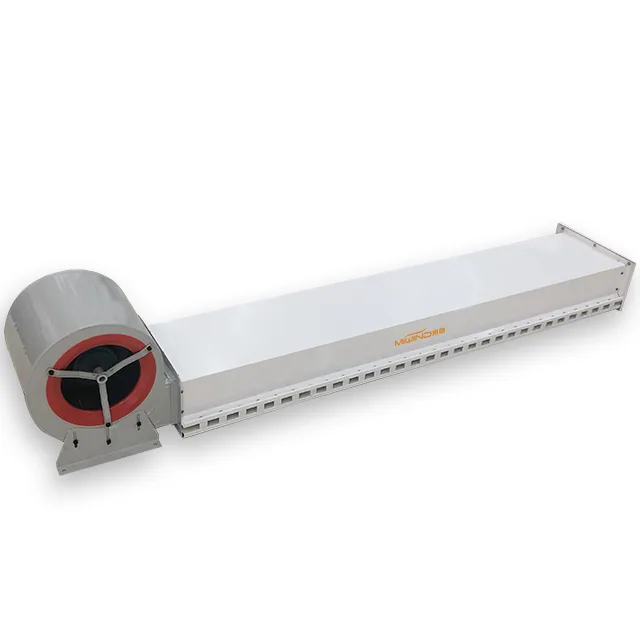
Compare these product families, then confirm the model against site conditions and current technical data.
For quotation or submittal use, align airflow, electrical, sound, controls, and certification status with the selected model. Start with Cold-storage air curtain when that path matches the room condition.
Use the field checklist and matrix to route cold-chain and food-processing support project needs before equipment documents are requested.
Cold-chain facilities combine temperature-separated openings with support rooms that may need exhaust, inline airflow, or moisture control.
Start with cold-storage air curtains for temperature-separated openings, then route support rooms to exhaust, inline fan, or dehumidifier review when the source and path are documented.
| Condition | Project facts | Recommended equipment | Decision note |
|---|---|---|---|
| Walk-in cooler or freezer door | Door size, temperatures, cycle rate, mounting, frost notes | Cold-storage air curtains | Keep temperature split with the doorway review |
| Refrigerated loading dock | Opening, carts or forklifts, exposure, open time, controls | Air curtains | Traffic and exposure can dominate the request |
| Food-processing support room | Area, heat or moisture source, CFM, duct route, cleaning access | Exhaust or inline fans | Separate general support airflow from process design |
| Packaging or bakery support | Odor, heat, humidity, duct route, service path | Inline, exhaust, or dehumidifier review | Use the source and discharge path to choose the lane |
| Moisture-sensitive storage | RH, temperature, drainage, duty cycle, access | Dehumidifiers | Capacity and low-temperature behavior need model data |
Choose the reference that matches the next project question.
MiWind will review the note and follow up with the appropriate product, document, or channel information.